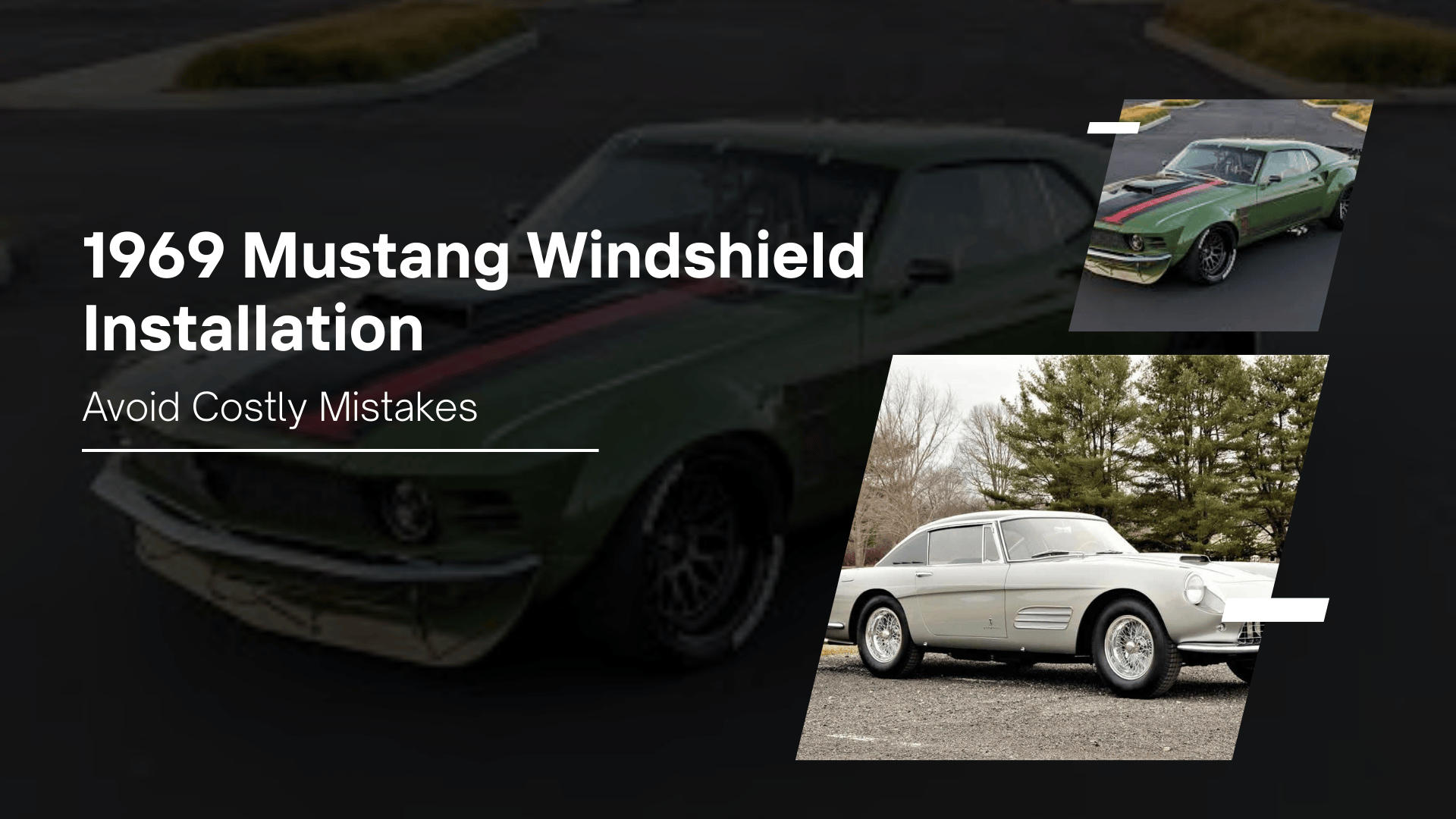
If you're working on a 1969 Mustang, chances are the windshield is giving you more concern than you expected. Fitment doubts, seal questions, and the fear of cracking an expensive panel often show up late in the build, right when patience and budget are already stretched.
The 1969 Mustang sits at a tricky point in Ford's production history. It blends older gasket-style practices with early adhesive-based methods, and five decades of body flex only add to the challenge. Treating the windshield as a simple glass swap can lead to leaks, stress cracks, or poor visibility, undermining the rest of the car.
This matters even more if the car is built for performance or vintage racing. The windshield affects sightlines, airflow, and driver protection at speed. This guide focuses on those realities.
Key Takeaways:
A 1969 Mustang windshield installation succeeds or fails based on fit accuracy, not on the force used during installation.
Body variation and age make off-the-shelf windshields a frequent source of cracks and leaks.
Cast acrylic performs best when formed to match the car's current geometry, not factory assumptions.
Proper preparation and controlled installation prevent stress from building into the windshield edges.
Custom fabrication reduces repeat failures and long-term visibility issues on classic Mustangs.
Why the 1969 Mustang Windshield Is Different by Design
Most 1969 Mustang bodies no longer match factory dimensions. Age, chassis movement, and past repairs change the windshield opening. Standard replacement glass is built to an ideal factory shape, which often creates edge pressure when installed in an older body. That pressure leads to cracks, leaks, or distorted visibility.
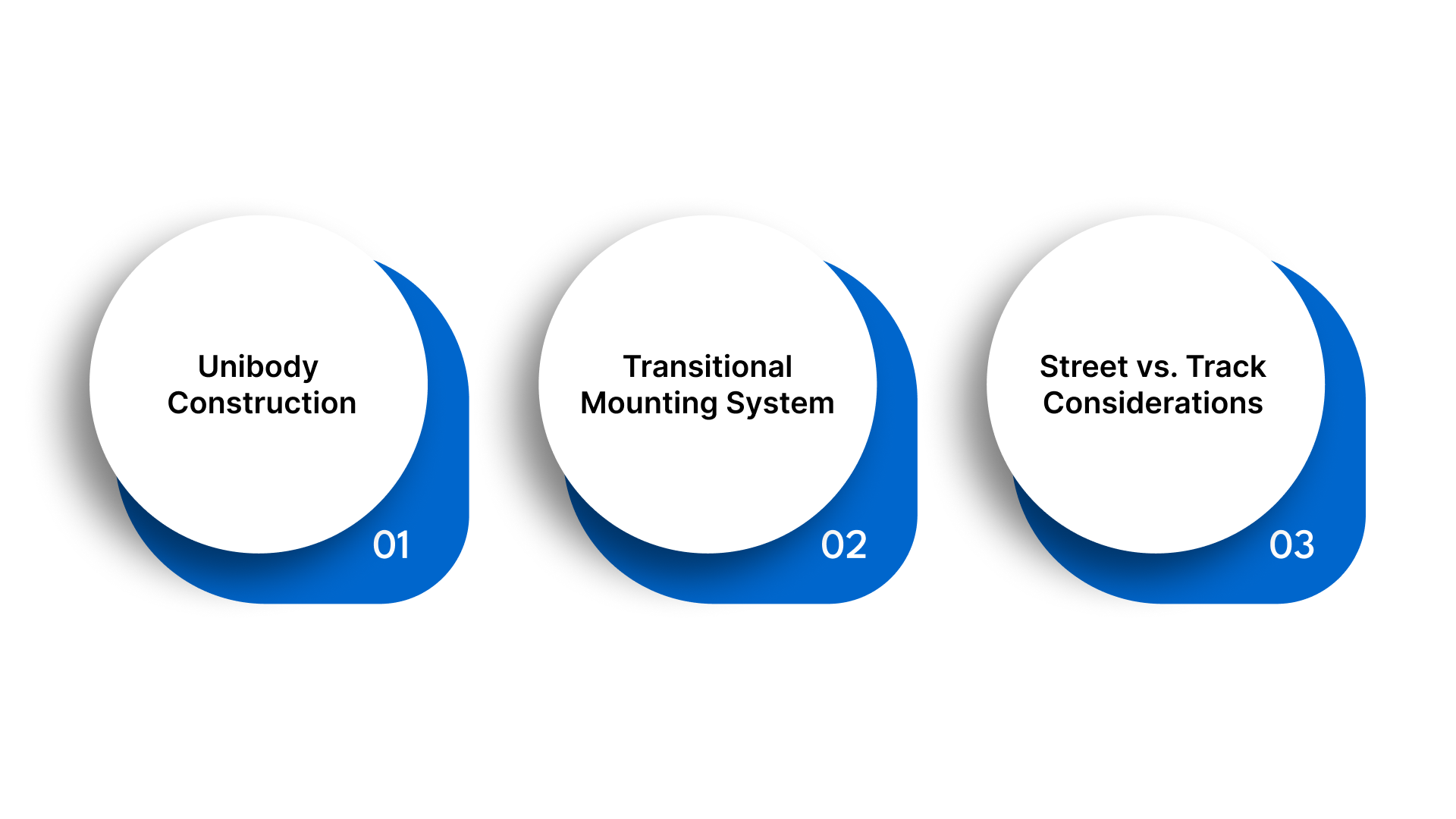
Here are the design factors that cause these issues:
Unibody Construction
The Mustang's unibody means the body and chassis move as one. Over the decades, this movement has altered the windshield opening. Even small changes affect how the glass sits and how stress is carried around the edges.
Transitional Mounting System
The 1969 model uses a mixed mounting approach. It relies on a gasket for retention but also depends on sealants and trim clips for sealing and stability. This setup demands accurate glass curvature. Any mismatch is quickly detected during installation.
Street vs. Track Considerations
Street cars focus on sealing and noise control. Track cars place higher demands on visibility, weight, and impact behavior. At speed, poor fit or optical distortion becomes obvious, making accurate fabrication far more critical.
With the body and mounting constraints understood, material choice becomes the next factor that determines long-term results.
Windshield Material Options for a 1969 Mustang
The windshield material sets limits on fit, visibility, and durability. On a 1969 Mustang, body variations and a sensitive mounting system mean rigid materials transmit stress to the edges, while properly formed plastics can absorb minor inconsistencies without failure.
Here are the primary material options used on 1969 Mustang builds:
Cast Acrylic (Preferred Choice)
Cast acrylic delivers high optical clarity with far less weight than glass. When thermoformed and annealed correctly, it accommodates subtle body variation and spreads load evenly around the opening. This makes it well-suited for vintage racing, performance builds, and serious restorations.
Laminated Automotive Glass
Laminated glass preserves a factory look and resists surface scratching. Its stiffness works against older bodies that no longer match original dimensions, which raises the chance of edge stress, leaks, or cracking.
For street-driven vehicles, federal regulations such as FMVSS 205 require laminated safety glass, which is why cast acrylic is primarily used for racing, display, and specialty applications rather than regular road use.
Also Read: Lexan or Plexiglass: Ultimate Windshield Material Guide
The Performance Standard: Custom Cast Acrylic
For the vintage racer or high-end restomod builder, cast acrylic stands above other options. This is the material used by Aircraft Windshield Company, for several clear reasons:
Weight Reduction: Acrylic weighs roughly half as much as glass. Replacing the windshield and rear window on a 1969 Mustang removes weight from the highest point of the car, lowering the center of gravity and reducing body roll in corners.
Impact Resistance: Racing environments throw rocks, rubber debris, and track grit at the windshield. Acrylic resists impact far better than glass and does not shatter, helping maintain visibility and protect the driver.
Optical Clarity: Cast acrylic offers light transmission that matches or exceeds glass when formed correctly. Unlike softer plastics, it maintains a clear, distortion-free view at speed.
Thermal Formability: Custom acrylic can be thermoformed to match altered rooflines, chassis changes, or roll cage geometry. This level of shape control is not possible with tempered or laminated glass.
Many fit issues trace back to how the previous windshield was removed, not how the new one is installed.
The Prep Work That Protects a 1969 Mustang Windshield
Most windshield failures trace back to preparation, not installation. On a 1969 Mustang, the outcome is largely decided during the dry fit, when the windshield is placed in the opening without gasket or sealant. This step reveals body distortion, surface flaws, and spacing issues before they become expensive problems.
Here are the preparation points that matter most:
Dry Fit Verification: The windshield should settle into the opening without force. Uneven gaps, rocking, or edge contact signal body variation that must be addressed before final installation.
Pinch Weld Condition: The pinch weld supports the windshield edge and should be clean and uniform. Rust and light corrosion can create pressure points that crack acrylic or glass. Old sealant residue must be fully removed for a smooth surface.
Surface Consistency: High spots, weld seams, or leftover material create localized stress. The contact area must be even from corner to corner to prevent edge loading once the windshield is seated.
Thermal Expansion Clearance: Cast acrylic expands more with heat than glass, so it needs a gap between the windshield edge and the frame to avoid binding and cracking. Custom fabrication allows for proper sizing and controlled movement.
Proper removal protects the geometry needed for a successful installation, especially on older Mustang bodies.
Also Read: Mastering Automotive Plastic Injection Molding: A Complete Industry Guide
Why Windshield Removal Is Risky on a 1969 Mustang
Removing the original windshield from a 1969 Mustang is where many projects go off track. Age, hardened sealants, and fragile trim turn removal into a high-risk step. Damage here often creates new fit issues that affect the replacement.
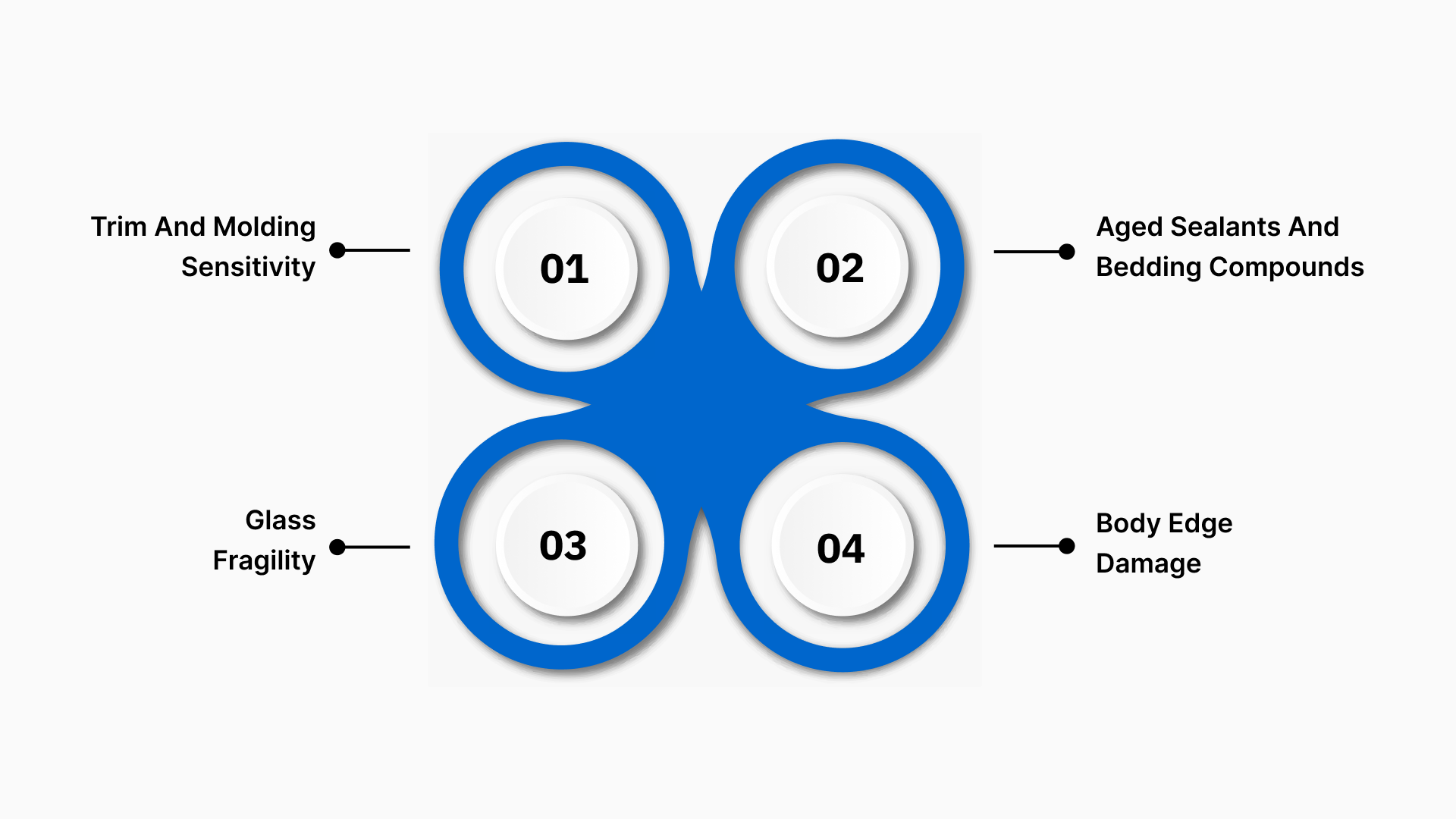
Here are the key considerations during removal:
Trim and Molding Sensitivity: Stainless trim and clips bend easily and are difficult to replace. Improper removal can distort the trim, which later prevents proper sealing and fit.
Aged Sealants and Bedding Compounds: Original butyl or early adhesive compounds harden over time. Cutting through them unevenly can twist the glass or tear metal edges along the opening.
Glass Fragility: Old laminated glass holds internal stress from years of use. Even controlled pressure can cause sudden cracking during extraction.
Body Edge Damage: Aggressive tools can gouge or bend the pinch weld. Any distortion created during removal must be corrected before a new windshield is fitted, especially when switching to acrylic.
Careful removal preserves the opening geometry and prevents added repair work before installation begins.
The Right Way to Install a 1969 Mustang Windshield
While professional installation is always recommended, understanding the process helps you oversee quality and spot problems before damage occurs. On a 1969 Mustang, the goal is not to lock the windshield in place, but to support it correctly while allowing controlled movement.
Here are the principles that define a correct installation:
The Floating Principle: The windshield must float within the opening, never contacting bare metal, so body movement and temperature changes do not create edge stress.
Setting Blocks and Height Control: Rubber setting blocks support the windshield's weight, control vertical position, and ensure stainless trim aligns correctly along the roof and pillars.
Sealant Choice for Acrylic: Flexible sealants are preferred for acrylic because they allow controlled movement, while rigid glass urethane can force stress into the edges.
Gasket and Rope-In Method: Gasket installations often use a rope-in method, where steady pressure and lubrication guide the gasket lip over the pinch weld.
Acrylic Handling: Acrylic should always be seated with slow, even pressure, since striking the surface can create hidden fractures that fail later.
When these principles are ignored, the same failures appear repeatedly across many replacement installations.
Common Problems with Off-the-Shelf Replacement Windshields
Many installation failures trace back to the windshield itself rather than the installer. Mass-produced replacement windshields are built to ideal factory dimensions, while most 1969 Mustang bodies no longer match those assumptions.
Here are the most common issues seen with off-the-shelf windshields:
Curvature Mismatch: Generic windshields often miss the subtle roof and cowl contours of an aged body, forcing the glass or acrylic to bend unnaturally during installation.
Edge Stress Concentration: Incorrect overall size or corner radius creates pressure points along the pinch weld, which leads to cracking shortly after installation.
Optical Distortion: Poor forming quality can warp sightlines, causing visual distortion that becomes obvious at speed or under bright light.
Trim Compatibility Issues: Stainless trim and molding clips depend on precise windshield height and shape, and small dimensional errors prevent proper seating.
Lack of Thermal Allowance: Many replacements ignore expansion needs, leaving no margin for temperature changes, which increases the risk of stress damage over time.
Avoiding these problems requires a windshield built into the car, not forced into a theoretical factory shape.
Aircraft Windshield Company: Precision Solutions for Classic Mustangs
This is where fabrication quality becomes measurable. Aircraft Windshield Company operates as a custom fabrication shop with aviation roots, not a mass-production parts supplier. The same standards used for aircraft transparencies guide every classic Mustang windshield we produce.
Here are the factors that define our approach:
Aviation-Derived Standards: Aircraft windshields allow no margin for failure, and that same discipline carries into our classic and vintage automotive work.
CAD and Physical Template Mapping: Each 1969 Mustang windshield is mapped using CAD data and physical templates, allowing us to match altered rooflines, raked pillars, or prior bodywork accurately.
Controlled Thermoforming: Cast acrylic is heated to a precise forming range, then shaped over high-accuracy tooling to preserve curvature and maintain clear sightlines through tight corner radii.
Stress-Relief Annealing: After forming, the windshield is cooled under controlled conditions to remove internal stress, reducing the risk of crazing or edge failure over time.
Application-Specific Fabrication: Every windshield is built for its intended use, whether that means street restoration, vintage racing, or a mixed road-and-track application.
What you receive is not a shelf part, but a component built to match how your Mustang exists today, not how it left the factory decades ago.
Conclusion
A successful 1969 Mustang windshield installation comes down to fit accuracy, material behavior, and respect for how these cars have changed over time. When any one of those factors is ignored, problems tend to surface later as cracks, leaks, or visibility issues.
If your Mustang demands a windshield built for its current geometry and intended use, Aircraft Windshield Company can help. Our team fabricates custom cast acrylic windshields for classic Mustangs with the same standards applied to aviation transparencies.
Contact us or request a quote to discuss your project and get a windshield built to fit, not forced to fit.
FAQs
Are acrylic windshields legal for street-driven vehicles in the United States?
Acrylic windshields typically aren't approved for street use because they don't meet Federal Motor Vehicle Safety Standard 205, which mandates laminated safety glass. Some specialty or collector vehicles might be exempt or have limited-use permits, but acceptance varies by state.
When are acrylic windshields typically chosen instead of glass?
Acrylic windshields are popular in vintage race cars, track builds, show vehicles, and specialty projects where road regulations don't apply. Builders prefer acrylic for its lightweight, impact resistance, and clarity in racing conditions.
Can an acrylic windshield be fabricated with tint or UV protection included?
Acrylic sheets can be made with integrated tinting or UV inhibitors, reducing glare, limiting heat buildup, and slowing material fading, without the peeling or bubbling issues of applied films.
How long does custom acrylic windshield fabrication usually take?
Lead time depends on whether an existing mold or pattern is available and how much customization is required. Common applications often take several weeks, while rare vehicles or modified bodies that require new pattern development may take longer.
What ongoing care is required to keep an acrylic windshield clear and undamaged?
Acrylic requires gentler care than glass. Cleaning should be limited to mild soap, water, and soft microfiber cloths, while avoiding alcohol, ammonia-based cleaners, or abrasive materials that can cloud or scratch the surface over time.