How do you evaluate a replacement aircraft window when the decision impacts airworthiness, structural integrity, and regulatory compliance? For procurement managers and maintenance teams, material choice directly affects performance under pressure loads, impact events, and long-term environmental exposure.
So, what are airplane windows made of in operational aircraft? They are not conventional glass panels, but engineered polymer transparencies selected for controlled failure behavior, optical precision, and the ability to withstand repeated pressure cycles and aerodynamic stresses.
This article outlines the materials, construction methods, and performance requirements that define how aircraft windows and windshields are specified, manufactured, and assessed for real-world service conditions.
Key Takeaways
Aircraft windows are engineered polymer transparencies, not conventional glass, due to weight, impact, and fatigue performance requirements.
Acrylic is widely used for optical stability and formability, while polycarbonate is selected for higher impact energy absorption.
Cockpit windshields use multi-layer laminated constructions to manage loads, pressure retention, and fail-safe performance.
Transparencies must meet operational criteria, including pressure cycling, optical distortion limits, impact resistance, and dimensional tolerance.
Forming accuracy, thickness control, bonding integrity, and inspection standards directly affect in-service reliability.
Why Is Standard Glass Not Used in Aircraft Windows?
Conventional glass does not meet the mechanical, weight, and fatigue performance requirements of flight-critical transparency components.
Aircraft windows operate in environments involving cyclic pressure loads, aerodynamic forces, impact risks, and temperature extremes, conditions where brittle materials present unacceptable failure characteristics.
Engineering limitations of glass in aircraft applications:
High density: Increases structural weight and affects aircraft efficiency
Brittle fracture behavior: Sudden, non-ductile failure without energy absorption
Low impact tolerance: Poor resistance to bird strikes or runway debris
Fatigue vulnerability under pressure cycling: Repeated cabin pressurization can initiate cracks
Limited thermoformability: Unsuitable for complex aerodynamic curvatures
Poor crack arrest capability: Damage propagation can be rapid and unpredictable
Aircraft transparencies must withstand repeated stress cycles, absorb impact energy, and maintain optical integrity, requirements better served by engineered polymer materials.
This need for controlled mechanical behavior and formable, lightweight materials leads directly to the polymer systems used in modern aircraft windows.
Primary Materials Used in Airplane Windows
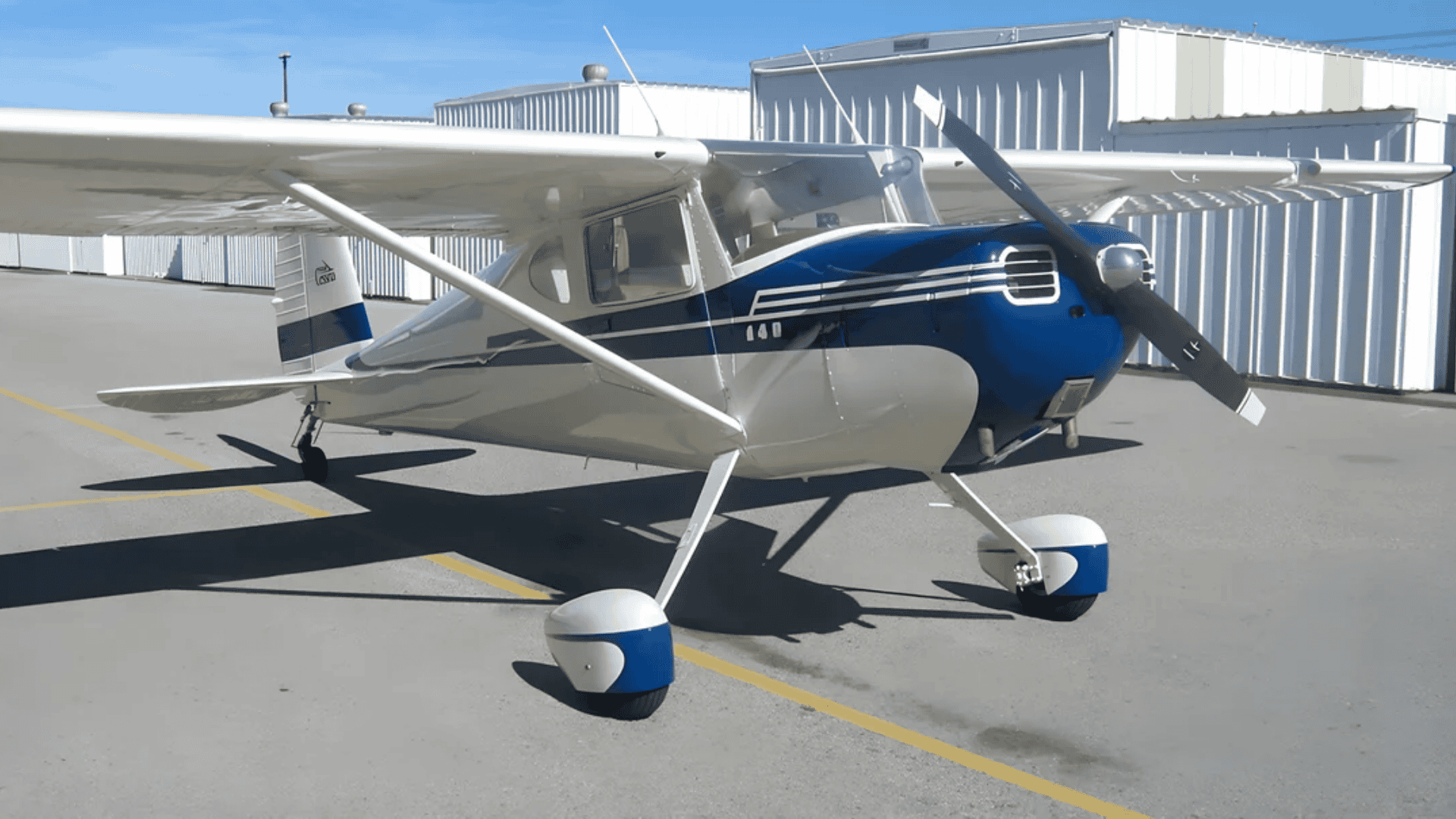
Aircraft windows are manufactured from engineered thermoplastic polymers selected for their ability to balance optical performance, structural resilience, and weight efficiency. These materials must perform under pressure differentials, aerodynamic loading, and environmental exposure without brittle failure.
The two dominant material systems used in operational aircraft transparencies are acrylic (PMMA) and polycarbonate.
Acrylic (PMMA) - The Most Common Aviation Transparency Material
Acrylic remains the primary material for many aircraft transparencies due to its optical stability and predictable structural behavior.
Key properties:
Property | Operational Relevance |
High optical clarity | Low distortion across pilot and passenger sightlines |
Low density (~1.19 g/cm³) | Weight efficiency vs glass |
UV resistance | Long-term outdoor exposure durability |
Thermoformable | Enables complex aerodynamic curvature |
Controlled crack propagation | Gradual failure mode vs sudden fracture |
Good surface hardness | Better scratch resistance than polycarbonate |
Typical applications:
Cabin windows
Side transparencies
Many general aviation windshields
Polycarbonate - High Impact Performance Material
Polycarbonate is selected when energy absorption and impact resistance are higher priorities than surface hardness.
Key properties:
Property | Operational Relevance |
Very high impact strength | Bird strike and debris resistance |
High ductility | Deforms before fracture, absorbing energy |
Lower surface hardness | Requires hard coatings for abrasion resistance |
Good temperature toughness | Performs in high-stress and dynamic zones |
Higher elongation at break | Tolerates deformation without cracking |
Typical applications:
Impact-prone windshields
Racing and specialty aircraft
Areas requiring improved toughness
Material selection is driven by the balance between optical performance, impact resistance, weight targets, and the specific operational loads expected in service.
Next, let’s look at the structural and functional differences between cockpit windshields and standard cabin windows.
How Aircraft Windshields Differ From Cabin Windows?
Aircraft windshields and cabin windows operate under different structural, optical, and safety demands. While both retain cabin pressure and provide visibility, windshields are treated as load-bearing, impact-critical components, whereas cabin windows function primarily as pressure-retaining transparencies with lower structural exposure.
Primary Functional Differences:
Parameter | Cockpit Windshields | Cabin Windows |
Structural Role | Load-bearing transparency integrated into fuselage structure | Non-load-bearing pressure panel |
Impact Requirement | Designed for bird strike and high-velocity debris | Limited impact exposure |
Optical Tolerance | Tight distortion limits in pilot line-of-sight | Broader tolerance for passenger visibility |
Pressure Resistance | Must withstand pressure differential + aerodynamic loads | Primarily pressure cycling loads |
Failure Criteria | Multi-layer fail-safe design required | Single-layer or simpler multi-layer design |
Thickness Range | Greater thickness to resist loads and impacts (based on impact requirements, aerodynamic loads, pressure differential, and structural integration) | Thinner panels for weight efficiency (based on window size, cabin pressure cycles, and optical requirements) |
These performance differences drive distinct engineering approaches in material selection, layering, and structural integration.
Cockpit Windshield Engineering Considerations:
Multi-layer laminated construction for impact resistance
Structural integration with fuselage framing
Resistance to aerodynamic pressure loads at cruise speeds
Optical quality in forward visibility zones
Designed to maintain integrity after outer layer damage
Cabin Window Engineering Considerations:
Designed for repeated pressurization cycles
Lower aerodynamic load exposure
Focus on optical clarity and weight reduction
Simpler structural integration
Failure modes managed through pressure-retention design
The distinction between structural windshields and pressure-retaining cabin windows directly influences material thickness, layering strategy, and performance specifications.
Understanding these functional differences sets the foundation for examining how multi-layer construction is used to distribute loads and provide redundancy in aircraft windshields.
Multi-Layer Construction of Aircraft Windshields

Aircraft windshields are engineered as laminated structural assemblies rather than single-piece panels. Layering is used to distribute loads, absorb impact energy, maintain pressure integrity, and provide fail-safe performance in the event of surface damage.
Typical Functional Layering:
Although configurations vary by aircraft category and certification basis, windshield laminates are generally designed with distinct functional layers:
Outer impact layer first contact surface for debris and bird strike, designed to resist penetration and absorb impact energy
Structural load-bearing layers that provide stiffness and distribute aerodynamic and pressure loads
Pressure containment layer responsible for maintaining cabin pressure under differential loading
Interlayers and bonding media that transfer loads between plies and prevent delamination
Inner fail-safe layer that preserves visibility and pressure retention if outer layers are damaged
Layer thickness ratios, bonding integrity, and forming precision directly influence impact resistance, load distribution, optical stability, and crack propagation behavior under operational conditions.
These construction principles set the stage for understanding the performance requirements aircraft windshields must meet in service environments.
Performance Requirements Aircraft Windows Must Meet
Aircraft windows and windshields are specified against operational load cases and environmental exposure rather than basic material strength values. These criteria define how transparencies must perform under real service stresses.
The core performance requirements include:
Optical distortion limits for maintaining pilot visibility within defined sightline zones
Pressure cycle durability to withstand repeated cabin pressurization without crack initiation
Temperature tolerance across high-altitude cold conditions and ground heat exposure
UV resistance to prevent long-term material degradation and loss of clarity
Impact resistance against bird strike and runway debris loads
Dimensional accuracy to ensure structural fit, sealing integrity, and load transfer
These performance thresholds guide both material selection and laminate construction strategy, which makes the trade-offs between acrylic and polycarbonate important when specifying aircraft windows.
Acrylic vs Polycarbonate - Material Selection Guide
Material selection for aircraft transparencies is driven by operational load cases, certification constraints, and service environment rather than general material properties alone.
Selection Factor | Acrylic Preferred When | Polycarbonate Preferred When |
Certification alignment | Application matches established PMA or legacy design specs | New design or modified impact requirements dictate alternative material |
Maintenance profile | Lower surface coating dependency is desired | Protective coatings and inspection cycles are acceptable |
Replacement frequency expectations | Longer optical stability with minimal surface treatment is required | Higher wear environments where replaceable coated surfaces are planned |
Structural redundancy approach | Multi-layer laminate design provides required safety margin | Impact energy absorption is the dominant safety requirement |
Inspection and repair strategy | Crack monitoring and controlled damage progression are acceptable | Deformation tolerance before replacement is preferred |
Operational risk profile | Lower debris exposure and controlled environments | High debris, FOD, or dynamic impact exposure environments |
Material selection therefore aligns with how the transparency is expected to perform within the aircraft’s operational and maintenance framework.
This makes manufacturing tolerances and quality controls the next critical factor to evaluate.
Manufacturing Factors That Affect Aircraft Window Performance
Material properties alone do not determine in-service performance. Forming accuracy, dimensional control, and inspection standards directly influence how aircraft transparencies behave under operational loads.
Thermoforming temperature control: Heating profiles must be tightly managed to prevent internal stresses, optical distortion, and thickness variation during forming.
Thickness uniformity: Variations across the panel affect load distribution and pressure resistance, making consistent gauge control essential.
Curvature accuracy: Formed geometry must match design tolerances to ensure aerodynamic fit, seal integrity, and proper load transfer.
Optical quality inspection: Transparencies are checked for distortion, inclusions, surface waviness, and refractive inconsistencies within visibility zones.
Bonding integrity in laminated assemblies: Interlayer adhesion and bonding consistency are critical for load sharing and impact resistance.
Dimensional tolerance verification: Final part dimensions must fall within defined limits to avoid installation stress and sealing failure.
Manufacturing precision determines whether material capabilities translate into operational reliability, which is why forming and inspection controls are as critical as material selection itself.
Looking for Aircraft Windows Built for Operational Performance?
Aircraft windows and windshields are engineered transparencies designed to withstand pressure differentials, impact loads, environmental exposure, and strict optical requirements.
At Aircraft Windshield Company, we manufacture certified and custom-formed aircraft transparencies built for real operational demands.
We provide:
FAA PMA-approved aircraft windshields and windows
Custom-formed acrylic and polycarbonate transparencies
Multi-layer laminated windshield assemblies
Replacement parts for legacy and hard-to-source aircraft
Large-format and complex-curvature forming
Inspection-controlled manufacturing for optical and dimensional accuracy
Contact us to discuss your aircraft transparency requirements, material selection, and forming specification
FAQs
Do aircraft windows degrade over time even without visible damage?
Yes. UV exposure, thermal cycling, and pressure loads can slowly affect optical clarity and material properties, even when no cracks are visible. Periodic inspection helps identify early signs of degradation.
Can small surface scratches affect aircraft window performance?
Yes, especially in high-stress zones. Surface scratches can act as stress concentrators and may reduce fatigue life under repeated pressure cycles, which is why surface condition is part of the inspection criteria.
Are aircraft windows repairable, or do they always require replacement?
Minor surface issues may sometimes be addressed, but structural cracks, delamination, or distortion typically require replacement to maintain airworthiness and pressure integrity.
Why do aircraft windows have rounded corners instead of sharp edges?
Rounded geometries help reduce stress concentration around window openings, improving fatigue resistance of both the transparency and the surrounding structure.
Does altitude affect how aircraft windows perform?
Yes. Lower temperatures and pressure differentials at altitude place cyclic stress on windows, which is why materials and laminates are designed for repeated high-altitude operational loads.