Choosing material for a formed automotive window isn't about preference; it's about how the part performs under stress, how accurately it holds curvature, and how long optical clarity remains stable in service. You're evaluating reliability, not aesthetics.
When you look for the best plexiglass for car windows, the real choice comes down to acrylic (PMMA) versus polycarbonate (Lexan). Each material responds differently during thermoforming, impact loading, and long-term environmental exposure.
This guide breaks down the material properties that influence manufacturing control, installation behavior, and in-service performance, so you can select based on measurable characteristics rather than assumptions.
Key Takeaways
Acrylic (PMMA) offers higher light transmission (~92%) and better optical uniformity in curved automotive windows.
Polycarbonate provides ~30× greater impact resistance but has lower surface hardness and higher scratch risk without coatings.
Acrylic has lower thermal expansion and more predictable thickness stability during thermoforming.
Polycarbonate tolerates vibration and mechanical stress better but requires UV-protective coatings for long-term clarity.
Material selection should be based on impact exposure, forming complexity, optical requirements, and environmental conditions.
Acrylic (Plexiglass) vs Lexan: Material Fundamentals
Before comparing performance, you need clarity on terminology. Plexiglass is a trade name commonly used for acrylic (PMMA - Polymethyl Methacrylate), a rigid, optically clear thermoplastic used in formed vehicle transparencies. Lexan is a trade name for polycarbonate, a different polymer known for its high impact resistance and flexibility.
Both materials are transparent thermoplastics used for forming automotive windows, but their molecular structure drives different mechanical behavior, forming response, and optical performance.
Chemical & Structural Differences:
Property | Acrylic (PMMA / Plexiglass) | Polycarbonate (Lexan) |
Polymer type | Polymethyl methacrylate | Bisphenol-A polycarbonate |
Rigidity | Higher stiffness | More flexible |
Brittleness | Brittle fracture behavior | Ductile, energy-absorbing |
Density | 1.17 - 1.20 g/cm³ | ~1.20 g/cm³ |
Acrylic maintains dimensional stability under load but fractures when impact limits are exceeded. Polycarbonate deforms and absorbs energy before failure, making it more tolerant of sudden forces.
These structural differences directly influence how each material behaves in optical performance, especially once curvature and viewing angles are introduced.
Optical Performance in Automotive Window Applications
Optical performance refers to how clearly you can see through the material without distortion, haze, or visual ripple. In automotive windows, this affects visibility accuracy, depth perception, and overall visual consistency once the panel is formed.
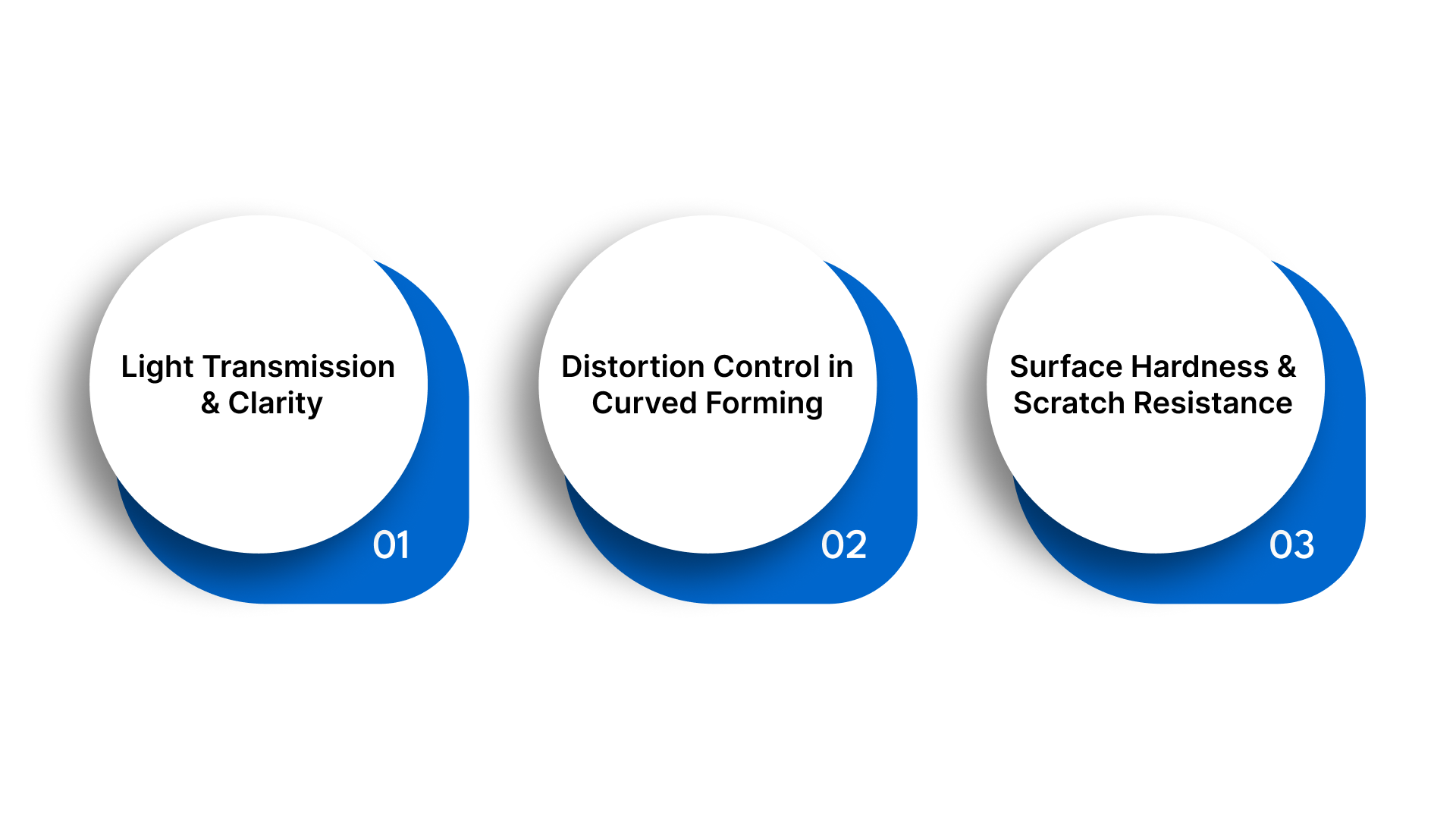
As curvature increases and viewing angles change, these optical factors become more critical, especially in large or complex shapes.
Light Transmission & Clarity
Acrylic provides higher light transmission and better edge-to-edge optical uniformity. This matters in restoration or precision builds where visual fidelity and minimal optical distortion are required.
Distortion Control in Curved Forming
During thermoforming:
Acrylic retains optical consistency more reliably across the formed surface.
Polycarbonate can develop internal stress haze if forming temperatures and cooling are not tightly controlled.
Surface Hardness & Scratch Resistance
Property | Acrylic | Polycarbonate |
Surface hardness | Higher | Softer |
Scratch resistance | Better baseline | Often requires coating |
Uncoated polycarbonate is more susceptible to surface scratching during cleaning, handling, and installation.
While optical performance determines how the window looks in service, the next critical consideration is how the material responds to physical loads, impact forces, and structural stress once installed.
Impact Resistance & Structural Behavior
Impact performance refers to how well a material absorbs and dissipates energy from sudden forces without failing. In automotive window applications, this determines resistance to debris, vibration stress, and accidental mechanical loads.
Impact Strength Comparison:
Property | Acrylic | Polycarbonate |
Relative impact strength | Moderate | ~30× higher |
Failure mode | Crack/shatter | Bend/deform |
Racing applications and debris-prone environments favor polycarbonate because its ductile behavior reduces the likelihood of sudden fracture.
Beyond how the material performs under impact, you also need to consider how it behaves during the forming process, especially when producing precise, curved automotive windows.
Thermoforming Performance for Curved Automotive Windows
Thermoforming performance describes how a material softens, stretches, and stabilizes when heated and formed into a curved shape. In automotive windows, this determines curvature accuracy, thickness distribution, and dimensional consistency.
Forming Temperature Ranges:
Material | Typical Forming Range |
Acrylic | 275°F to 350°F (135°C to 177°C) |
Polycarbonate | 300–500°F (149–260°C) |
Note: The exact forming window within this range depends on sheet thickness, part geometry, and heating method.
Polycarbonate requires tighter temperature and cooling control to prevent internal stresses that can affect long-term optical and structural stability.
How the material responds to forming temperatures also influences how well it withstands environmental exposure once installed.
Environmental Durability & Long-Term Material Stability
Environmental durability refers to how well the material maintains optical clarity, mechanical strength, and dimensional stability when exposed to sunlight, temperature cycling, moisture, and outdoor conditions over time.
In automotive window applications, this directly affects service life, appearance retention, and structural reliability.
UV Stability
Material | UV resistance |
Acrylic | Naturally UV stable |
Polycarbonate | Requires UV-protective coating |
Acrylic resists yellowing and clarity loss under prolonged sun exposure without additional treatments. Polycarbonate can degrade, discolor, or lose impact performance if not protected by a UV-stabilizing surface layer.
Temperature Tolerance
Property | Acrylic | Polycarbonate |
Continuous service temp | Moderate | Higher |
Thermal expansion | Lower | Higher |
Polycarbonate tolerates higher temperatures but expands more with heat. Acrylic provides better dimensional consistency where temperature cycling occurs.
Moisture & Weather Exposure
Acrylic absorbs very little moisture and maintains surface clarity under outdoor exposure. Polycarbonate can be more sensitive to environmental stress cracking when exposed to certain chemicals combined with humidity.
Long-Term Optical Retention
Acrylic maintains surface gloss and transparency longer in outdoor environments. Polycarbonate clarity depends heavily on coating integrity over time.
Material durability under environmental exposure becomes a deciding factor only after forming accuracy and mechanical performance have been considered, which leads directly into installation and fabrication considerations.
Fabrication, Machining & Installation Considerations
Material selection affects not only in-service performance but also how the part behaves during trimming, drilling, edge finishing, and installation. Differences in rigidity and stress response influence machining tolerances and fastening reliability.
The following fabrication factors should be evaluated before final material selection:
Cutting & Trimming
Acrylic: Machines cleanly; recommended slower feed rates to reduce edge chipping
Polycarbonate: Tolerates higher feed rates; less prone to brittle edge fracture
Edge Finishing
Acrylic: Flame or solvent polishing restores optical edge clarity
Polycarbonate: Mechanical finishing preferred; solvent methods can cause surface stress
Drilling & Hole Preparation
Acrylic: Requires oversized holes (~1.5–2× fastener diameter tolerance) to allow for thermal expansion and reduce cracking
Polycarbonate: More forgiving, but sharp drill bits required to avoid melting
Fastening & Mounting
Acrylic: Higher risk of stress cracking around fasteners; load-distributing washers recommended
Polycarbonate: Handles mechanical fasteners better due to flexibility
Adhesive Bonding
Acrylic: Compatible with solvent cements and acrylic adhesives
Polycarbonate: Requires specialty adhesives; solvent bonding not recommended
Cold Bending Tolerance
Acrylic: Limited cold forming; risk of stress fracture
Polycarbonate: Can tolerate mild cold bending
Let’s look at how these material differences translate into specific automotive applications and use-case requirements.
Application-Based Material Selection for Automotive Windows
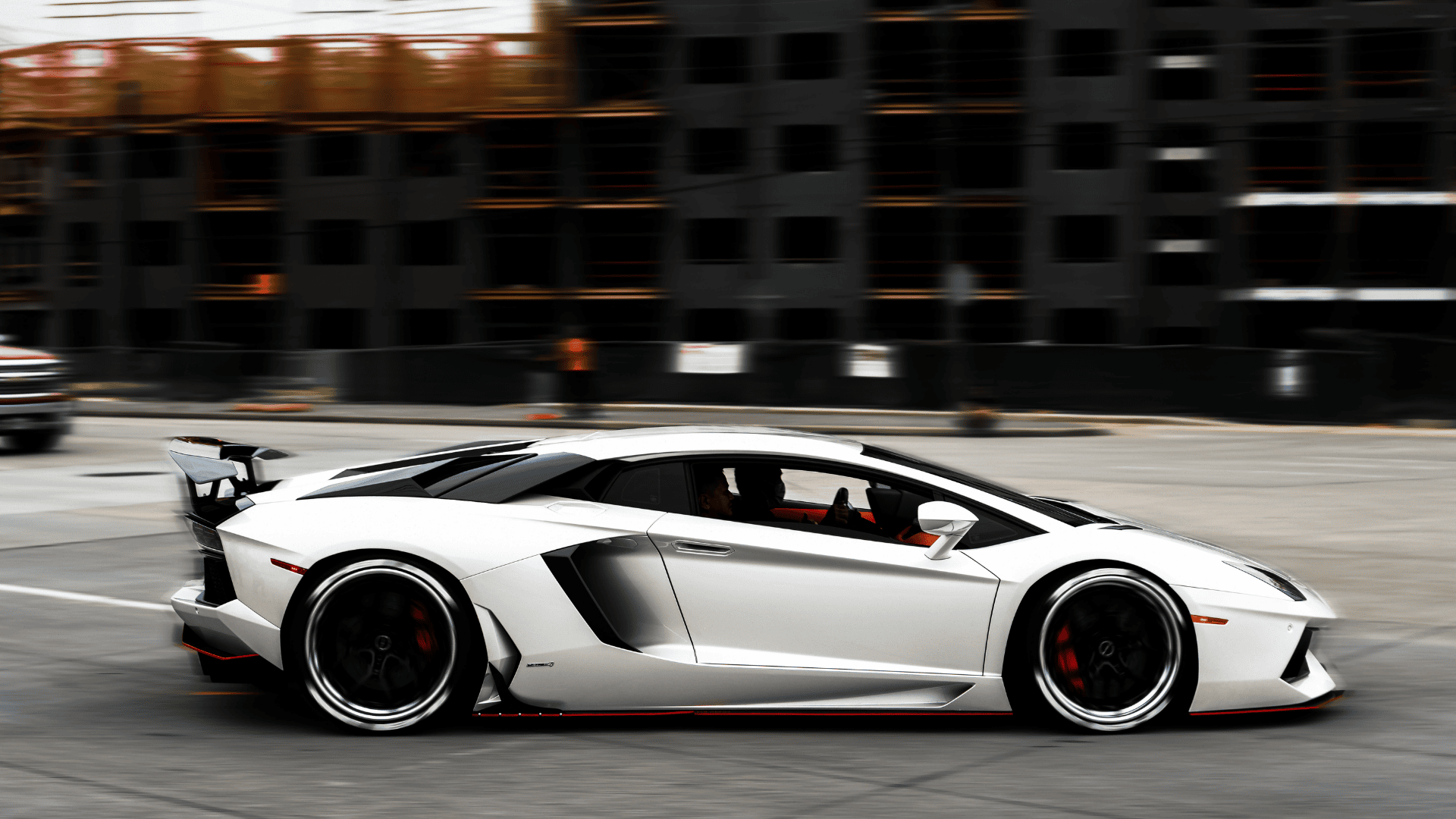
Material performance requirements change depending on vehicle type, operating environment, and design constraints. Selection should align with optical demands, impact exposure, forming complexity, and long-term durability expectations.
Vintage & Classic Restoration
Recommended Material: Acrylic (PMMA / Plexiglass)
Light transmission up to ~92% for high visual fidelity
Superior optical uniformity in curved panels
Higher surface hardness; reduced scratching during maintenance
Lower thermal expansion, minimizing mounting stress
Naturally UV stable for long-term clarity
Racing & High-Impact Environments
Recommended Material: Polycarbonate (Lexan)
Impact resistance ~30× higher than acrylic
Ductile failure behavior reduces sudden fracture
Better tolerance to vibration and mechanical stress
Suitable for mechanically fastened installations
Often used with abrasion-resistant hard coatings
Large Curved Automotive Panels
Recommended Material: Acrylic (PMMA)
Predictable forming behavior
Lower risk of thinning at tight radii
Superior post-form optical consistency
Better dimensional repeatability for complex geometries
Understanding where each material performs best is only part of the decision process.
Let’s review the inherent limitations of each material so tradeoffs are fully clear before final specification.
Material Performance Limitations & Tradeoffs
No material is universally suitable for all automotive window applications. Performance advantages come with tradeoffs that affect durability, optical behavior, and handling during service.
Acrylic Limitations
Lower impact resistance; prone to cracking under sudden loads
Brittle failure mode once stress limits are exceeded
Limited tolerance to cold bending
Can fracture if mounting stresses are not controlled
Polycarbonate Limitations
Softer surface; higher scratch susceptibility
Lower baseline optical clarity than acrylic
UV stability depends on protective coatings
Higher thermal expansion can increase mounting stress
Let’s consolidate these performance differences into a direct comparison framework to support final material selection.
Plexiglass (Acrylic ) vs Lexan (Polycarbonate): Decision Matrix for Procurement Buyers
Use this matrix to align material behavior with application requirements, focusing on performance under forming, service loads, and environmental exposure.
Evaluation Criteria | Acrylic (Plexiglass / PMMA) | Polycarbonate (Lexan) |
Light transmission | Up to ~92% | ~88–90% |
Visual clarity | High definition | Slight internal haze possible |
Impact tolerance | Moderate | ~30× higher |
Failure behavior | Brittle fracture | Ductile deformation |
Surface hardness | Higher | Softer; often coated |
Scratch resistance | Better baseline | Lower without hard coat |
UV stability | Naturally stable | Coating dependent |
Thermal expansion | Lower | Higher |
Forming predictability | High dimensional repeatability | More process-sensitive |
Thickness stability during forming | More uniform | Greater thinning at radii possible |
Machining behavior | Clean cuts; crack-sensitive | More tolerant, but heat-sensitive |
Cold bending tolerance | Limited | Moderate |
Best suited for | Restoration, optical precision, large curved panels | Racing, impact-prone, high-vibration environments |
This comparison supports material selection once performance priorities are clearly defined.
Ready to Source Precision-Formed Automotive Windows?
Material selection for automotive windows comes down to optical accuracy, impact performance, forming stability, and long-term environmental durability. Acrylic and polycarbonate serve different performance priorities, and the right choice depends on how the part must function in service.
At Aircraft Windshield, we manufacture precision-formed transparent components using controlled thermoforming processes and application-driven material selection. Our focus is dimensional accuracy, optical consistency, and reliable performance in real operating conditions.
We provide:
Custom-formed windshields for vintage, classic, and specialty vehicles
Replacement transparencies where OEM parts are discontinued or unavailable
Windshields for vintage racing and custom automotive builds
Transparent components for film, entertainment, and concept vehicles
One-off and low-volume production with tight tolerance control
Contact us to discuss your application and determine the appropriate material and forming approach for your automotive window requirements.
FAQs
Can plexiglass car windows be legally used on road vehicles?
It depends on local vehicle regulations. Many regions allow acrylic or polycarbonate for side or rear windows, but laminated safety glass is often required for windshields.
Does acrylic or polycarbonate affect the interior cabin temperature?
Yes. Both materials transmit heat differently than glass, and tinting or coatings can influence solar heat gain inside the vehicle.
Can plexiglass windows be tinted after forming?
Yes, but film adhesion and optical distortion must be evaluated. Some coatings and forming stresses can affect how tint films perform over time.
How long do acrylic automotive windows typically last outdoors?
High-quality acrylic can maintain clarity for many years with proper UV resistance and care. Environmental exposure and cleaning practices play a major role.
Are polycarbonate windows noisier at high speeds?
They can be, if the thickness and mounting design are not optimized. Material flexibility may increase vibration-related noise compared to stiffer acrylic panels.