When specifying an aircraft windshield replacement, the decision goes beyond fit; it directly affects pressure containment, impact resistance, and inspection compliance. For procurement teams and MRO engineers, a wrong material stack or construction approach can introduce operational risk and premature service issues.
Understanding aircraft windshield layers is essential because these assemblies function as structural transparencies, not simple panels. Layer design determines how loads are distributed, how cracks propagate, and how the windshield performs under thermal and aerodynamic stress.
Before evaluating specifications or supplier capabilities, it is important to understand how layered windshield structures are built and what each material contributes. The following sections outline the materials, layer types, and structural functions that define these assemblies.
Quick look
Laminated transparent assemblies use multiple formed plies to manage pressure differential, impact loading, and thermal stress.
Acrylic provides up to ~92% light transmission; polycarbonate is selected where higher impact strength is required.
Layer stacks are defined by speed, pressurization level, curvature limits, and optical distortion tolerances.
Bond-line quality and ply thickness control influence fatigue resistance and long-term laminate stability.
Procurement review should verify material grade, thickness tolerance, dimensional conformity, and certification documentation.
Why Do Aircraft Windshields Use Multi-Layer Structural Construction?
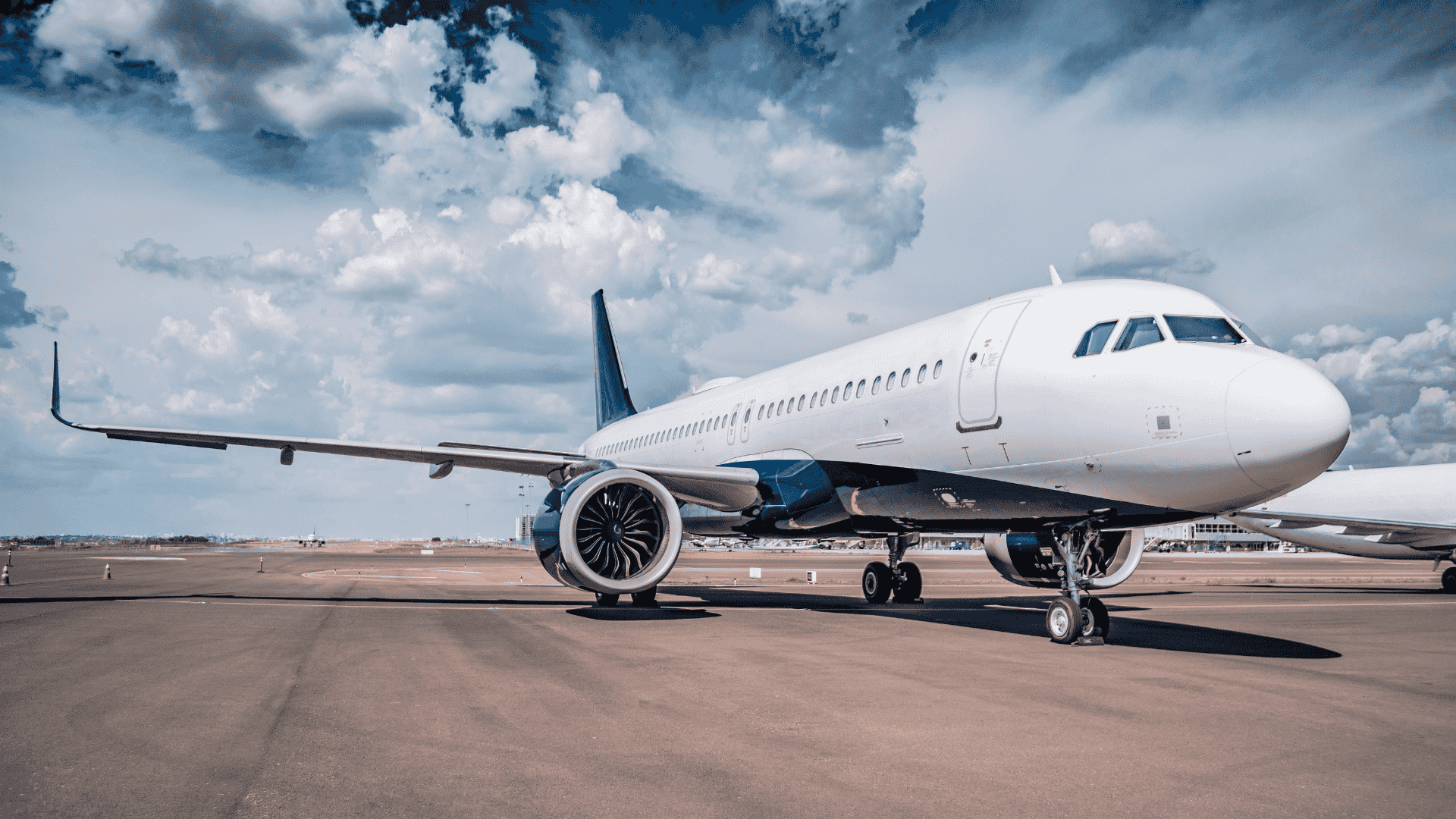
Aircraft windshields function as structural components, not simple transparent panels. They must perform reliably under combined mechanical and environmental loads throughout the service envelope.
Operational load conditions include:
Cabin-to-ambient pressure differentials
High-speed aerodynamic forces
Rapid temperature gradients
Impact from debris or a bird strike
Continuous UV and moisture exposure
Single-ply materials cannot provide sufficient redundancy or energy absorption under these conditions. Multi-layer construction distributes stress, reduces crack propagation risk, and maintains structural integrity if one ply is compromised.
Understanding these performance demands helps clarify why specific layer types and material combinations are used in aircraft windshield assemblies.
Primary Layer Types Found in Aircraft Windshield Assemblies
Aircraft cockpit windshields are typically manufactured as laminated assemblies combining structural glass plies, functional coatings, and bonding interlayers. Each layer is selected based on load-bearing requirements, thermal performance, and environmental exposure.
The table below outlines the core layer categories typically found in aircraft windshield constructions:
Layer Type | Typical Material | Material & Construction Characteristics |
Outer ply | Tempered or chemically strengthened glass | High surface hardness; resistant to erosion and impact; formed to aerodynamic contour |
Heater layer | Conductive film or coating | Electrically conductive layer laminated within the stack; supports de-icing and anti-fog functions |
Middle structural ply | Glass | Secondary structural layer; provides redundancy and load sharing if outer ply is compromised |
Interlayer / bonding layer | Urethane or equivalent | Flexible adhesive layer; bonds glass plies; accommodates differential thermal expansion |
Inner ply | Acrylic or glass | Cabin-side surface; optical-grade finish; compatible with interior pressure and visibility requirements |
Anti-fog / optical coating (if present) | Optical coating | Applied to interior-facing surface; minimizes fogging without degrading transparency |
Layer count and sequence vary depending on aircraft design and certification requirements, but these material categories form the basis of most laminated aircraft windshield constructions.
Let’s now move into the materials themselves and the properties that make them suitable for layered windshield assemblies.
Materials Used in Aircraft Windshield Layer Construction
Material selection in layered aircraft windshields is driven by optical performance, mechanical properties, and compatibility with forming and lamination processes. Each material is chosen based on how its intrinsic properties support the overall assembly requirements.
Acrylic (PMMA) Structural Plies
Acrylic is widely used in aviation transparencies due to:
Light transmission up to ~92% for high visual fidelity
Low internal haze and optical distortion
Stable performance across typical aviation temperature ranges
Lower density compared to many transparent engineering plastics
It offers consistent forming behavior under controlled thermoforming conditions, helping maintain optical quality after shaping.
Polycarbonate Impact Plies
Polycarbonate provides:
Higher impact strength compared to PMMA
Greater resistance to sudden fracture under dynamic loading
Higher elongation before failure
It has higher moisture absorption than acrylic and a softer surface, which is why hard-coat systems are often applied when abrasion resistance is required.
Interlayer and Bonding Materials
Bonding interlayers are selected based on:
Adhesion compatibility with acrylic and polycarbonate substrates
Resistance to moisture ingress
Optical transparency after curing
Controlled flexibility to accommodate differential thermal expansion
Interlayer chemistry influences long-term bond stability and resistance to environmental aging.
Understanding the material properties that define each ply helps clarify how laminated assemblies are specified and evaluated.
Let’s now look at how each layer behaves within the assembly when exposed to operational conditions.
Structural Function of Each Aircraft Windshield Layer
While materials define what a windshield is made of, structural function explains how each layer performs when the assembly is subjected to pressure, aerodynamic loading, and environmental stress.
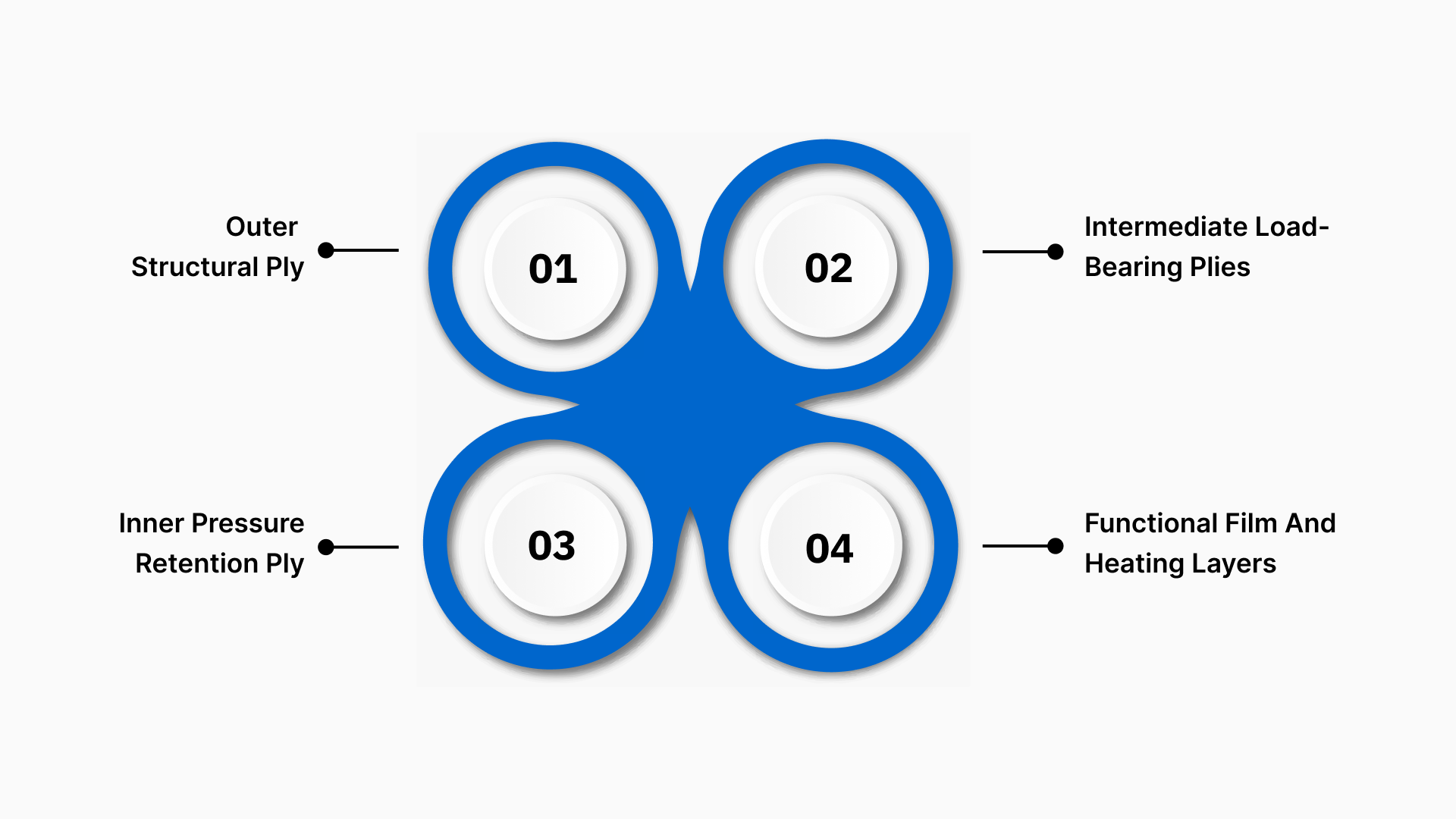
Each ply contributes to how forces are absorbed, transferred, or contained across the laminated structure.
Outer Structural Ply
This ply receives the initial mechanical input from external forces.
It experiences:
Localized surface stress from aerodynamic pressure
Repeated dynamic loading from airflow-induced vibration
Sudden force transfer during impact events
Thermal expansion and contraction from rapid temperature changes
Its role is to accept the first load impulse before stresses transfer deeper into the laminate.
Intermediate Load-Bearing Plies
These plies manage how forces propagate through the thickness of the assembly.
They:
Spread bending stresses across multiple layers
Limit stress concentration at a single interface
Support the laminate’s resistance to flexural deformation
Provide secondary load paths if an outer ply is compromised
Their placement influences how the windshield resists distortion under pressure.
Inner Pressure Retention Ply
This ply operates at the cabin interface where pressure differential is present.
It must:
Sustain cyclic tensile loading during pressurization changes
Maintain structural continuity without fatigue-driven cracking
Support the laminate’s resistance to inward deflection
Its stability contributes to consistent pressure retention performance.
Functional Film and Heating Layers
Embedded films operate within the laminate without acting as primary structural plies.
Their integration must ensure:
Uniform stress distribution around film boundaries
No localized stiffness discontinuities
Stable performance during thermal cycling
Proper integration prevents stress concentration near film edges.
Understanding how mechanical loads are transferred through the layered assembly clarifies why layer placement and thickness selection are design-critical.
Let’s now look at the design factors that determine how these layers are arranged within the windshield stack.
Design Factors That Determine Aircraft Windshield Layer Stack
Layer configuration is determined by aircraft operating envelope, certification constraints, and forming limitations rather than fixed templates. Engineers select ply count, thickness, and lamination design based on how the assembly must behave under combined pressure, aerodynamic, and environmental stresses.
Key design inputs include:
Cruise speed & aerodynamic pressure: Dynamic pressure increases with velocity squared; higher speeds require greater laminate stiffness to limit surface deflection and optical distortion.
Cabin pressurization differential: Pressure loads act continuously across the inner surface; higher differential values influence inner ply thickness and laminate stress distribution.
Impact resistance criteria: Bird strike and debris impact standards drive material selection and energy absorption capability within the stack.
Thermal operating range: Exposure to low external temperatures and heated interior surfaces requires materials with compatible thermal expansion behavior.
Windshield curvature & forming limits: Tighter radii increase forming stress and influence allowable material thickness combinations.
Optical distortion limits: Viewing clarity requirements constrain allowable deformation and laminate thickness variation across the field of view.
Moisture and environmental exposure: Lamination systems must resist long-term moisture ingress that can degrade bond lines and transparency.
These inputs collectively define how the layer stack is engineered for a given aircraft application. Lets now examine the performance advantages achieved through multi-layer windshield design.
Performance Advantages of Multi-Layer Aircraft Windshield Design
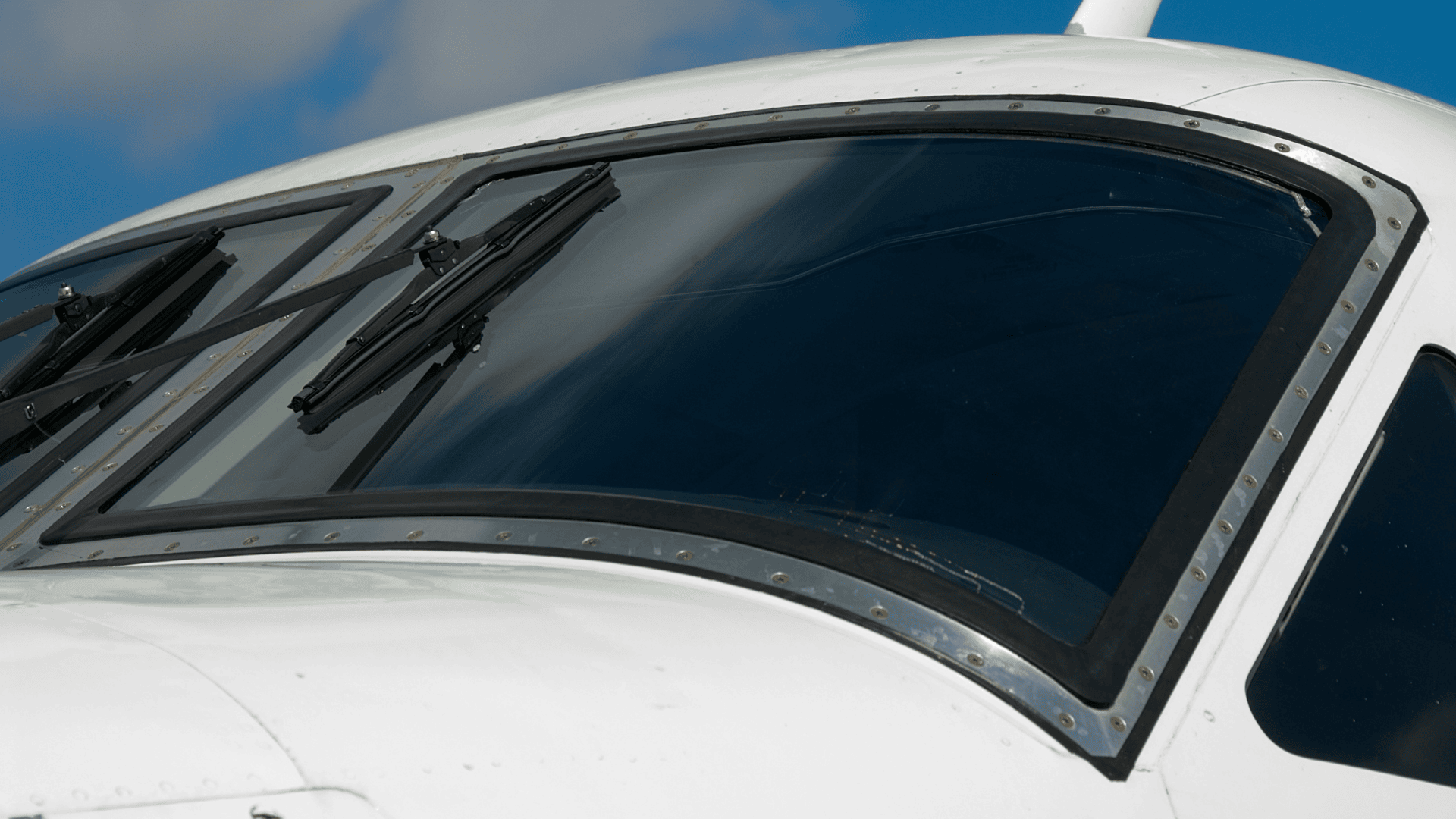
Multi-layer windshield assemblies are engineered to maintain performance limits under pressure loading, aerodynamic stress, impact events, and thermal cycling. The advantages are reflected in measurable operational behavior of the laminate during service.
Pressure-Load Deflection Control
Higher laminate flexural rigidity compared to single-ply sheets
Reduced inward displacement under cabin-to-ambient pressure differential
Maintains seal geometry and frame conformity during altitude cycling
Impact Load Attenuation
Strike forces redistributed laterally through bonded interfaces
Lower peak stress concentration at initial impact point
Reduced probability of through-thickness fracture
Residual Strength After Surface Damage
Inner plies retain load-bearing continuity if the outer ply is compromised
Delays loss of pressure-retention capability
Maintains short-term structural integrity until maintenance
Optical Stability Under Aerodynamic Loading
Increased stiffness limits surface deformation at cruise dynamic pressure
Reduced stress-induced optical variation across the viewing field
Supports consistent visual clarity under load
Fatigue Resistance Under Pressurization Cycling
Cyclic tensile stress shared across multiple plies
Slower accumulation of fatigue-related microcracks
Extended service durability under climb–descent cycles
Thermal Gradient Tolerance
Differential expansion distributed across laminate thickness
Reduced surface stress concentration during temperature transitions
Lower risk of thermally induced cracking
These operational performance benefits explain why aircraft transparencies rely on layered laminate construction rather than monolithic materials.
Let's now examine the failure modes that multi-layer design helps mitigate.
Failure Risks Mitigated by Layered Windshield Construction
Layered windshield assemblies are designed to interrupt damage progression and preserve laminate integrity under operational exposure. The construction helps control several failure risks that can develop during service.
Through-thickness crack propagation following surface damage
Bond-line separation due to moisture and thermal cycling
Fatigue-driven crack initiation from repeated pressurization cycles
Progressive shape deformation under combined pressure and temperature loads
Fragment release from localized surface damage
Layered construction limits how these failures initiate and spread across the assembly.
Lets now move into the procurement specifications used to evaluate layered aircraft windshield assemblies.
Procurement Specifications for Aircraft Windshield Layered Assemblies
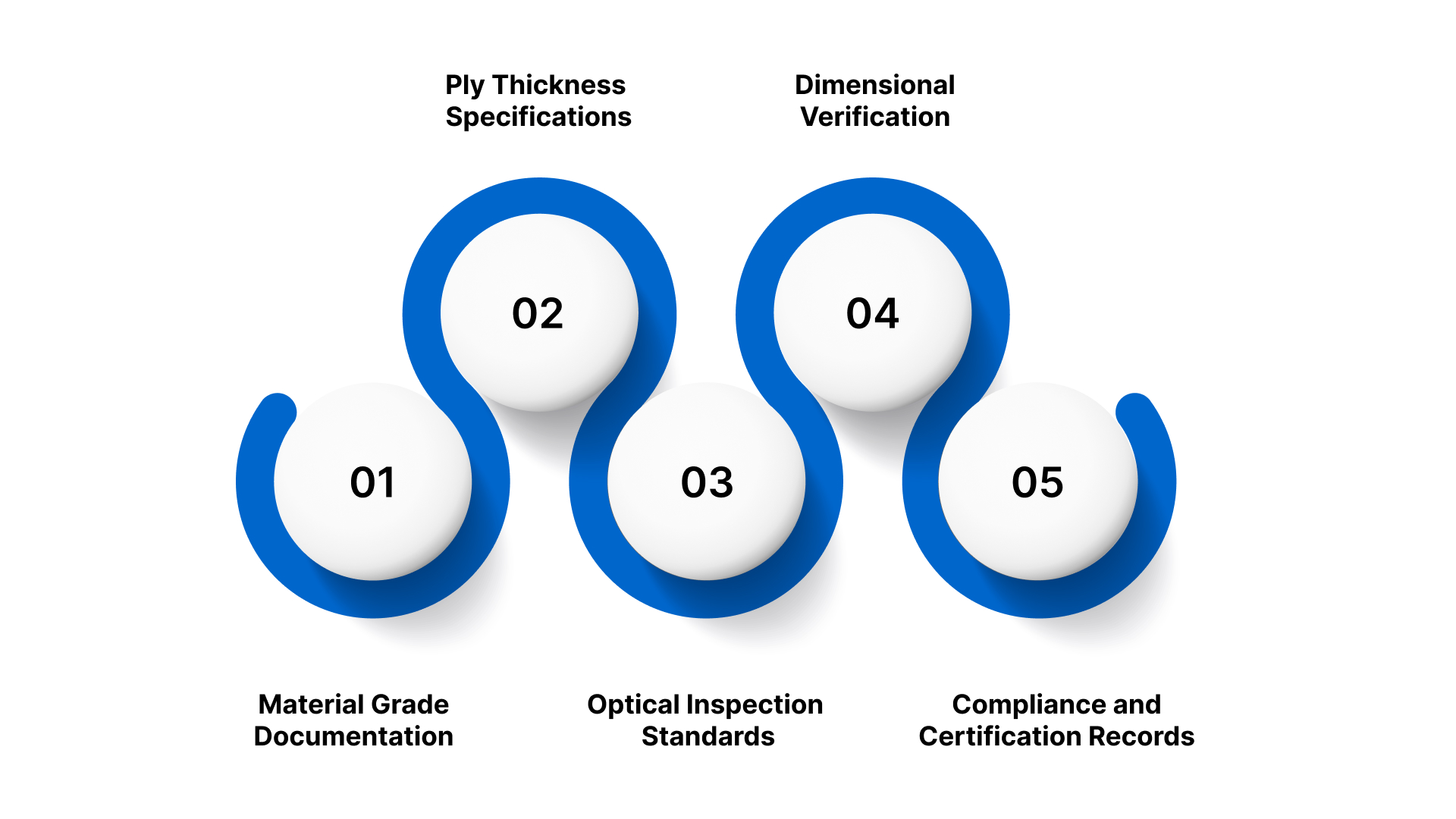
When evaluating layered aircraft windshields, procurement review should focus on documented material conformity, dimensional accuracy, and inspection verification. The checklist below outlines specification points typically required before approval.
Material Grade Documentation
Acrylic or polycarbonate material designation provided
Optical-grade certification or supplier material datasheet included
Traceability records for raw material batches
Ply Thickness Specifications
Nominal thickness for each ply documented
Allowable thickness tolerance stated
Total laminate thickness verified against drawing
Optical Inspection Standards
Inspection criteria for haze, inclusions, and surface defects defined
Viewing-zone optical quality requirements specified
Inspection method (visual, light transmission, or equivalent) recorded
Dimensional Verification
Curvature and contour conformity checked against engineering drawing
Edge geometry and mounting interface dimensions verified
Fit-related tolerances documented
Compliance and Certification Records
Applicable certification basis referenced (e.g., PMA or equivalent approval)
Manufacturing and inspection documentation available
Part identification and traceability labeling confirmed
These parameters form the basis of technical acceptance and installation suitability for layered windshield assemblies.
Ready to Apply Layered Windshield Design in Production?
Layered aircraft windshields rely on controlled material selection, ply configuration, and lamination precision to manage pressure loads, impact exposure, and environmental stress.
At Aircraft Windshield Company, we manufacture custom-formed aircraft windshields and laminated transparencies backed by over six decades of forming experience. We focus on precision fabrication, certification compliance, and application-specific transparent structures.
We provide:
FAA PMA-approved aircraft windshields
Custom laminated acrylic and polycarbonate assemblies
Replacement windshields for legacy and hard-to-source aircraft
Large-format formed transparencies up to 10 ft
Low-volume and specialty production runs
Precision thermoforming and lamination expertise
Contact us for technical consultation on layered windshield assemblies.
FAQs
Do laminated aviation transparencies have a service life limit?
Yes. Service life depends on the operating environment, UV exposure, pressure cycling, and maintenance practices. Even without visible damage, material aging and micro-stress buildup can affect long-term performance.
Can laminated transparent assemblies be repaired if damaged?
Minor surface scratches may be addressed through approved polishing methods, but structural cracks or delamination typically require full replacement to maintain compliance and integrity.
Why is optical inspection important during acceptance checks?
Internal haze, inclusions, or distortion can affect visibility and indicate manufacturing or aging issues. Inspection ensures the transparency meets viewing-zone clarity requirements before installation.
Does temperature variation affect laminated transparency performance?
Yes. Rapid thermal transitions create expansion differences across layers. Proper material pairing and lamination control help reduce stress concentration caused by these changes.
Are all laminated aviation transparencies interchangeable between aircraft of the same model?
No. Dimensional tolerances, curvature, and certification approval must match the specific configuration. Even small geometry differences can affect fit and load distribution.