Finding a replacement windshield for a Lotus Elan is rarely a straightforward sourcing exercise. Original components are often discontinued, dimensional references are inconsistent, and even minor fitment errors can derail a restoration or specialty build.
For procurement managers and restoration leads, the real challenge is not availability alone; it is ensuring the windshield meets curvature, thickness, and optical requirements specific to the Lotus Elan body. A visually acceptable part that fails dimensional checks still introduces long-term risk.
This article breaks down what defines a Lotus Elan windshield from a technical standpoint, the fitment sensitivities involved, and the evaluation criteria that matter when specifying or approving a replacement.
At a glance
Lotus Elan windshields are geometry-sensitive components where small curvature or thickness deviations can cause fitment and sealing issues.
Front windshields and rear windows follow different optical, curvature, and mounting requirements and must be evaluated separately.
Cast acrylic is commonly specified due to its optical clarity, weight characteristics, and suitability for complex thermoformed shapes.
Manufacturing factors such as thickness control, mold accuracy, edge finishing, and cooling discipline directly affect long-term fit stability.
Inspection should focus on curvature accuracy, optical distortion under viewing angles, edge compatibility, and thickness consistency before acceptance.
Understanding the Lotus Elan Windshield Configuration
The Lotus Elan windshield is a vehicle-specific transparent component designed around tight body tolerances and lightweight construction principles. Unlike modern production vehicles, the Elan's body geometry leaves little margin for dimensional deviation.
Most Lotus Elan configurations involve two distinct transparent parts:
Front windshield, responsible for forward visibility and aerodynamic interaction
Rear window, which follows a different curvature and mounting profile
These components are not interchangeable and must be evaluated independently during sourcing. The front windshield typically carries stricter optical and curvature requirements due to driver sightlines, while the rear window prioritizes shape conformity and mounting accuracy.
Across restoration and racing applications, the windshield is expected to match original geometry while accommodating modern material constraints. This makes specification accuracy a baseline requirement, not a refinement step.
Let's examine how geometry and fitment sensitivity influence whether a Lotus Elan windshield performs as intended once installed.
Geometry and Fitment Sensitivity in Lotus Elan Windshields
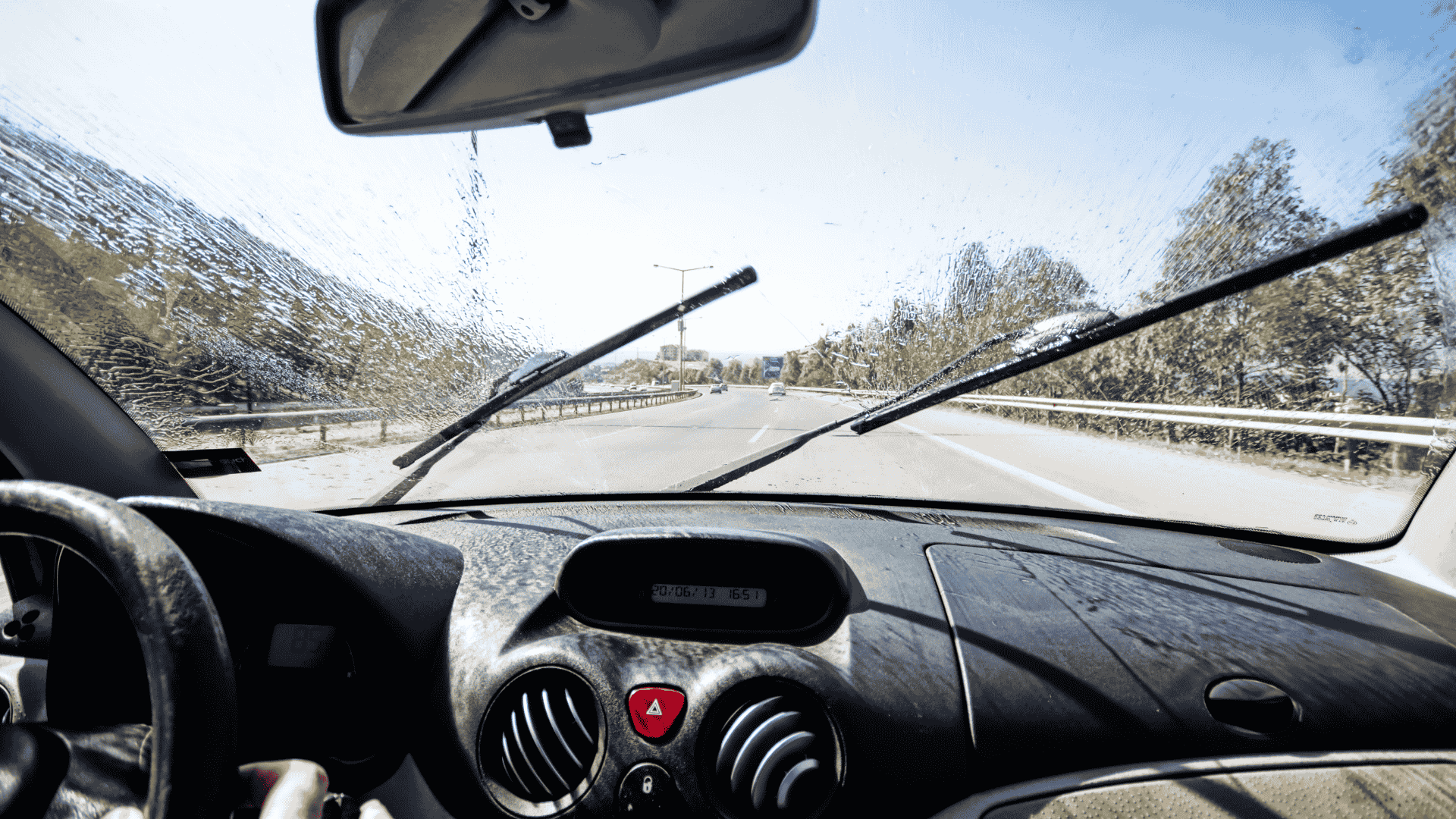
Fitment accuracy in Lotus Elan windshields is governed primarily by geometry rather than material availability. Small dimensional errors compound quickly due to the vehicle’s tight body tolerances and lightweight construction.
Let’s start by looking at how curvature accuracy affects the windshield’s interface with the Lotus Elan body.
Curvature Accuracy and Body Interface
Lotus Elan bodies are highly sensitive to curvature mismatch. Even small deviations in radius can:
Prevent proper seating within the frame
Create sealing gaps along mounting edges
Introduce localized stress points once installed
Because the windshield follows compound curves, flat or near-flat substitutions are not viable. Accurate forming is essential to ensure the part aligns with the body without forcing, shimming, or post-installation adjustment, all of which increase the risk of long-term fitment issues.
Tolerance Constraints in Front vs Rear Components
Aspect | Front Windshield | Rear Window |
Visual sensitivity | High due to direct driver sightlines | Moderate |
Optical distortion tolerance | Very low | Low to moderate |
Curvature accuracy requirement | Critical | Critical |
Thickness consistency impact | Directly affects visibility | Affects mounting stability |
Primary risk if out of tolerance | Immediate usability issues | Long-term sealing or fit degradation |
The front windshield carries tighter visual tolerances because any optical distortion, edge misalignment, or uneven thickness is immediately apparent during operation.
Rear windows, while less visually critical, still demand precise dimensional accuracy to maintain proper fit and avoid long-term mounting or sealing failures.
Let’s now look at how material selection influences fit, optical performance, and long-term reliability in Lotus Elan windshield applications.
Material Selection Considerations for Lotus Elan Windshields
Material choice plays a direct role in optical clarity, fit stability, and long-term performance of Lotus Elan windshields. Selection decisions must align with vehicle geometry, use conditions, and original design intent.
Let’s look at why cast acrylic is commonly specified for Lotus Elan applications before evaluating broader material trade-offs.
Use of Cast Acrylic in Lotus Elan Applications
Cast acrylic is commonly specified for Lotus Elan windshields due to:
High optical clarity
Lower weight compared to glass
Suitability for complex thermoformed shapes
For restoration programs, acrylic allows accurate replication of original geometry while maintaining consistent visual quality across the viewing area. In racing environments, reduced weight and predictable formability become additional practical considerations.
Performance Trade-offs in Transparent Materials
Material selection must account for:
Impact resistance requirements
Environmental exposure conditions
Long-term optical stability
While alternative transparent materials exist, substitutions should be evaluated carefully. Changes in material properties can influence thickness distribution during forming, curvature retention over time, and overall fit once installed.
For Lotus Elan applications, maintaining consistency with the original design intent is typically prioritized over material experimentation.
Let’s move next to the manufacturing factors that directly influence fit accuracy and performance consistency in Lotus Elan windshields.
Manufacturing Factors That Influence Fit and Performance
Manufacturing quality directly determines whether a Lotus Elan windshield meets curvature, thickness, and optical requirements once installed. Small deviations introduced during fabrication often surface later as fitment or visibility issues.
Key Manufacturing Factors to Evaluate:
Thermoforming temperature control: Ensures consistent material flow and prevents localized thinning or surface stress.
Thickness distribution across the formed surface: Uniform thickness is critical for optical clarity, structural stability, and predictable mounting pressure.
Mold or template accuracy: Existing, vehicle-specific molds reduce geometry drift and improve repeatability across production runs.
Curvature retention after forming and cooling: Improper cooling cycles can lead to gradual shape relaxation and fit loss over time.
Edge trimming and finishing precision: Edge geometry must align with mounting frames and seals without forcing or modification.
Surface stress management: Residual stress introduced during forming can affect long-term durability and optical performance.
Each of these factors contributes to whether the finished windshield performs as intended under real operating conditions.
Let's now look at the inspection and acceptance criteria used to verify optical and dimensional accuracy before a Lotus Elan windshield is approved for installation.
Optical and Dimensional Inspection Criteria
Inspection is the final control point before a Lotus Elan windshield is approved for installation. Optical and dimensional checks help identify forming or finishing issues that may not be evident during fabrication.
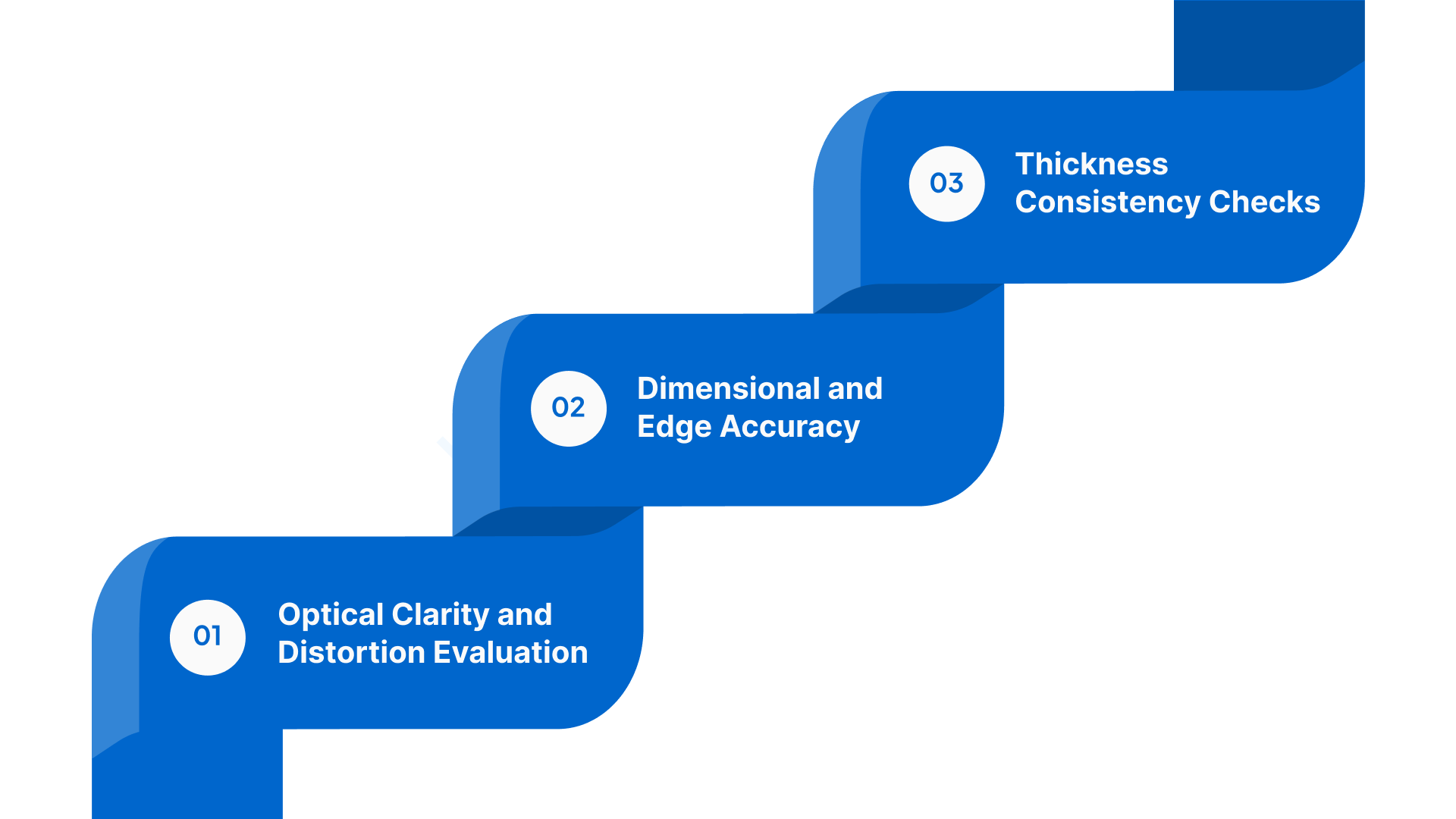
Optical Clarity and Distortion Evaluation
Before acceptance, windshields should be inspected for:
Visual waviness
Distortion at common viewing angles
Inconsistent light transmission
These issues may not be immediately visible when static but often become apparent during operation, particularly under changing light conditions or at speed.
Dimensional and Edge Accuracy
Critical inspection points include:
Overall length and width
Edge profile consistency
Compatibility with seals and mounting frames
Improper edge finishing is a common source of installation difficulty and long-term fitment failure, even when overall dimensions appear correct.
Thickness Consistency Checks
Thickness should be measured at multiple points, particularly near:
Curved transitions
Edge zones
High-stress mounting areas
Uneven thickness often indicates forming imbalance and should be flagged during evaluation, as it can affect both optical performance and structural stability.
Let’s now review configuration considerations, including clear and tinted windshield options, and how they affect application-specific requirements.
Clear vs Tinted Windshields for Lotus Elan Applications
Clear and tinted windshields serve different functional and visual requirements in Lotus Elan applications. The choice affects visibility, glare management, and overall consistency between front and rear transparent components.
Let’s look at the clear and tinted options across key evaluation criteria:
Evaluation Factor | Clear Windshield | Tinted Windshield |
Optical clarity | Maximum light transmission | Slightly reduced light transmission |
Glare management | Minimal glare reduction | Improved glare control in bright conditions |
Visual accuracy | Closest to original appearance for many models | May alter original visual profile |
Driver visibility | Highest visibility in low-light conditions | Balanced visibility with glare reduction |
Consistency across components | Easier to match front and rear parts | Requires careful tint consistency |
Application suitability | Common in restoration-focused builds | Often selected for racing or high-glare environments |
Let’s now look at the common fitment and sourcing risks that procurement teams should account for when specifying Lotus Elan windshields.
Common Fitment and Sourcing Risks to Account For
Most Lotus Elan windshield issues originate during specification and sourcing rather than installation. Tight body tolerances leave little margin for dimensional or material deviation.
Key risks to account for include:
Curvature mismatch from generic or approximate forming radii, resulting in poor frame seating and uneven mounting loads.
Optical distortion caused by uneven thickness or uncontrolled forming, often missed during static inspection but visible in operation.
Unvalidated material substitutions that alter thickness distribution, curvature stability, or long-term dimensional retention.
Edge geometry inaccuracies that compromise seal engagement and mounting alignment.
Post-forming shape relaxation due to inadequate cooling control, leading to gradual fit degradation over time.
Most failures trace back to incomplete specification review rather than installation error. Early technical evaluation helps avoid rework, delays, and downstream component rejection.
Let’s close with a practical evaluation checklist that procurement and build teams can apply consistently across Lotus Elan windshield programs.
Evaluation Checklist for Lotus Elan Windshield Procurement
This checklist is intended to help procurement and build teams standardize evaluation of Lotus Elan windshields before approval or installation. Each item focuses on specifications that directly affect fit, optical performance, and long-term reliability.
Confirm vehicle model, body variant, and production year
Identify component type (front windshield or rear window)
Verify material specification (cast acrylic)
Confirm target thickness and allowable tolerance range
Validate curvature accuracy against reference geometry or templates
Check thickness consistency across curved and edge zones
Inspect optical clarity under operational viewing angles
Verify absence of distortion, waviness, or light inconsistency
Review edge profile for seal and mounting compatibility
Confirm forming and cooling controls to prevent shape relaxation
Applying this checklist consistently helps reduce fitment risk, avoid downstream rework, and ensure Lotus Elan windshields meet both dimensional and performance expectations before installation.
Key Takeaways for Restoration and Specialty Build Teams
Lotus Elan windshields demand precise evaluation across geometry, material selection, forming accuracy, and inspection standards. Small deviations in curvature, thickness, or optical quality can quickly translate into fitment issues, visibility concerns, or long-term performance risk.
At Aircraft Windshield Company, we manufacture custom automobile windshields built to exact specifications for real-world restoration and specialty applications. Our work focuses on precision, repeatability, and material performance, not generic replacements.
What we provide:
Custom-fabricated Lotus Elan front windshields and rear windows
Premium cast acrylic with consistent thickness and optical clarity
Accurate curvature matched to vehicle-specific geometry
Clear and tinted finishes based on application requirements
If you’re evaluating or specifying a Lotus Elan windshield and need technical clarity or production support, contact us to discuss your requirements.
FAQs
Can a Lotus Elan windshield be reused if it appears undamaged?
Yes, but only after proper inspection. Visual condition alone doesn't reveal internal stress, edge wear, or subtle distortion that can affect fit after reinstallation.
Does the production year of a Lotus Elan impact windshield fit?
Yes. Body geometry and mounting profiles can vary by production year or variant, making year-specific verification important before approving a replacement.
Are front and rear Lotus Elan windshields evaluated the same way?
No. Front windshields carry stricter optical and visibility requirements, while rear windows prioritize curvature accuracy and mounting stability.
Can material differences alter the appearance of a restored Lotus Elan?
Thickness, tint density, and surface finish can subtly change proportions and reflections. Matching original specifications helps maintain visual accuracy.
What risks come with sourcing a windshield without physical references?
Relying only on drawings or nominal dimensions increases the risk of curvature mismatch. Physical reference data improves accuracy for tight-tolerance bodies like the Lotus Elan.