Long flights often come with familiar frustrations. Sun glare across the windshield, cabin heat building up, and interior materials fading faster than expected are common concerns. Many pilots and aircraft owners also consider prolonged sun exposure at altitude, where protection is limited and flight time can add up quickly.
UV exposure increases as altitude rises. Aviation and atmospheric research show that for every 1,000 meters of altitude gained, ultraviolet radiation intensity increases by about 10-12%. That steady increase exposes crews and passengers to more than they experience on the ground, especially during daytime operations.
In this blog, we’ll explore what tinted UV protection aircraft replacement windows offer, how FAA rules affect tinting and UV protection, the materials used in certified replacements, the benefits of built-in UV blocking, when replacement makes sense, and how to evaluate compliant options for long-term comfort and visibility.
Key Takeaways:
Tinted aircraft windows rely on built-in UV protection within the material, not surface-applied films.
FAA rules require aircraft windows to maintain clear visibility, structural performance, and proper documentation.
UV exposure increases with altitude, making UV protective replacement windows relevant for many flight profiles.
Aging or damaged windows are better replaced than modified to avoid visibility and compliance issues.
Certified replacement windows support long-term clarity, interior protection, and continued airworthiness.
What “Tinted” Means in FAA-Approved Aircraft Windows
The word tinted often causes confusion in aviation. Many aircraft owners associate it with darker glass or applied films, yet certified aircraft windows follow a very different approach. In FAA-approved replacement windows, tint relates to how the material manages ultraviolet light, not how dark the window appears.
Here are the key points that define what tinted means in FAA-approved aircraft replacement windows.
Built into the material: UV protection is incorporated directly into the acrylic during manufacture rather than added later as a surface layer.
Not surface-applied film: Stick-on or adhesive films are separate products and are generally not acceptable on certified aircraft windows.
Clear appearance with UV filtering: Many UV-protective windows appear clear to the eye while still reducing ultraviolet transmission.
Controlled light transmission: Approved windows maintain required visibility levels for day and night operations.
Designed for long-term use: Because UV protection is part of the material, it does not peel, bubble, or wear away over time.
Once you understand how tint is built into aircraft windows, the next step is reviewing how FAA regulations control its acceptable use.
Also Read: Airplane Windshield Care: Understanding Risks and Solutions
FAA Regulations on Aircraft Window Tinting and UV Protection
FAA regulations governing aircraft window tinting and UV protection are defined primarily by 14 CFR §25.775 and Advisory Circular AC 25.775-1. These rules establish strict requirements for visibility, material behavior, and safety performance.
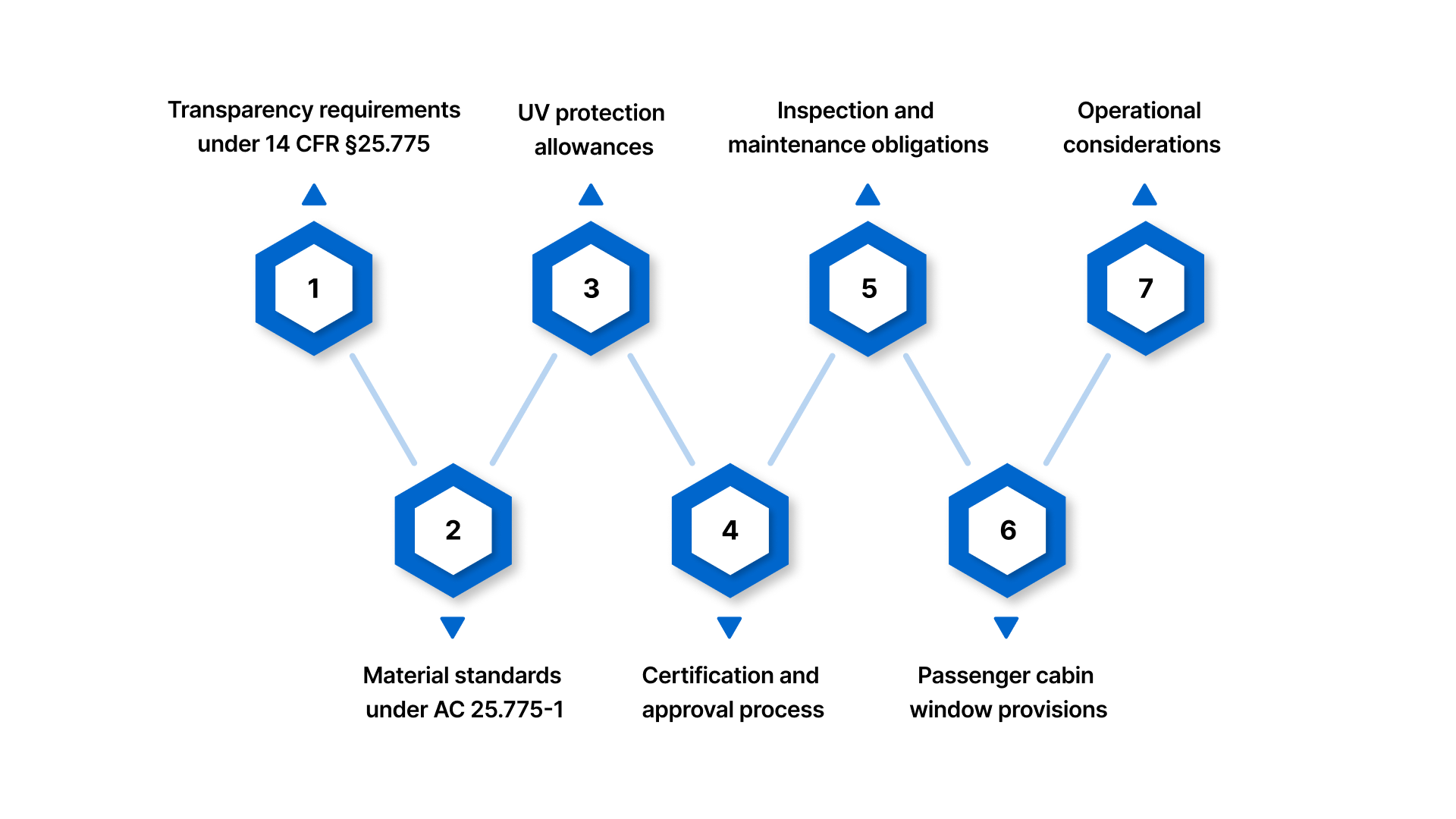
Tinting or UV blocking is permitted only when it does not reduce pilot visibility, compromise structural performance, or fall outside approved certification limits.
Here is a clear restatement of the regulatory requirements, without losing detail.
Transparency requirements under 14 CFR §25.775:
Cockpit windshields must provide clear, unobstructed external vision. Tint levels are limited so pilots can reliably see runway lighting, terrain features, and other aircraft under all operating conditions, including low-light and night conditions.
Material standards under AC 25.775-1:
Window panes must be made from nonsplintering materials, and complete window assemblies must withstand pressurization loads and environmental stresses. Any tint or UV blocking feature must be part of a certified window design that meets these structural and safety requirements.
UV protection allowances:
The FAA allows UV-blocking glass or coatings only when light transmission remains within approved limits. Certified UV- and infrared-blocking windows typically maintain light transmittance in the mid- to high-70 % range, ensuring visibility is preserved.
Certification and approval process:
Aftermarket tint films or UV coatings are not permitted unless they have been tested, approved, and documented through FAA certification processes. Operators may not apply unapproved films or coatings under any circumstances.
Inspection and maintenance obligations:
Tinted or UV protective windows must be inspected regularly for discoloration, delamination, surface damage, or loss of clarity. Any condition that affects visibility or structural behavior requires corrective action to maintain airworthiness.
Passenger cabin window provisions
Passenger windows allow greater flexibility than cockpit windshields, provided tinting does not interfere with emergency markings, exit visibility, or flammability requirements. Cabin tinting must still comply with FAA material standards.
Operational considerations
Pilots must confirm that tinted cockpit windows do not interfere with instrument readability or external signal recognition. FAA guidance makes clear that safety and visibility take priority over glare reduction or comfort benefits.
These regulatory standards directly influence the materials approved for aircraft windows and how UV protection is incorporated.
Materials Used in UV Protective Aircraft Replacement Windows
Most UV protective aircraft replacement windows for general aviation are fabricated from premium cast acrylic, often known by the trade name Plexiglas. This material is widely used because it provides consistent optical clarity, reliable impact resistance, built-in UV protection, and lower weight than glass, all of which support safe flight operations and predictable performance over time.
Here are the primary materials used in certified UV protective aircraft replacement windows.
Material | Key Characteristics | UV Protection Method | Typical Use |
Cast Acrylic (PMMA) | High optical clarity, stable thickness, good impact resistance, lighter than glass | UV blocking incorporated into the acrylic during manufacture | Windshields and windows on most general aviation aircraft |
Stretched Acrylic | Improved resistance to cracking and surface stress | UV protection built into the base material | Higher stress window locations |
Polycarbonate | Very high impact resistance, flexible under load | Requires protective coatings to reduce UV-related degradation | Limited or specialized applications |
Laminated Acrylic Assemblies | Multiple acrylic plies bonded with transparent interlayers | UV protection depends on acrylic formulation and layer design | Windshields and pressurized cabin windows |
Material selection directly affects visibility, durability, and long-term service behavior, which is why cast acrylic remains the industry standard for general aviation aircraft transparencies.
Also Read: What Aircraft Windshield Materials Are Used and Why They Matter
Key Benefits of Tinted UV Protection Aircraft Replacement Windows

Tinted UV protection aircraft replacement windows address several common concerns tied to comfort, visibility, and long-term aircraft care. Because UV protection is built into the window material, these benefits are present without changing how the window is used or maintained.
Here are the primary benefits of UV-protective aircraft replacement windows.
Reduced ultraviolet exposure: Built-in UV blocking limits the amount of harmful radiation reaching pilots and passengers during flight, especially at higher altitudes.
Improved glare control: UV protective materials help reduce harsh sunlight and eye strain without darkening the viewing area or affecting visual reference points.
Interior material preservation: Lower UV transmission helps slow fading and deterioration of upholstery, panels, and interior surfaces exposed to sunlight.
Consistent optical clarity: Engineered materials maintain uniform clarity across the window surface, supporting traffic scanning, landing judgment, and situational awareness.
Long-term material stability: UV protection integrated into the acrylic reduces surface degradation and discoloration over time, supporting predictable service life.
Even with clear benefits, you still need to determine whether replacement is appropriate compared to modifying existing aircraft windows.
Also Read: Lexan or Plexiglass: Ultimate Windshield Material Guide
Replacement vs Modification: Choosing the Right Aircraft Window Option
As aircraft age, window condition often becomes a safety and visibility concern rather than a cosmetic one. Attempts to modify existing windows can introduce compliance issues and short-term fixes that do not address underlying material wear. In many cases, replacement offers a clearer, more predictable solution.
Here are situations where replacing aircraft windows is the better option.
Yellowing and discoloration: Aging acrylic can take on a yellow or cloudy appearance, reducing light transmission and outside visibility. Replacement restores clear viewing surfaces.
Crazing and surface cracking: Fine crack networks can form from stress, chemicals, or long-term sun exposure. These cracks weaken the material and scatter light, making repair impractical.
Optical distortion: Warping or uneven thickness in older windows can distort visual reference points. Replacement returns uniform optical performance.
Compliance concerns: Modifications such as applied films or coatings often lack approval and documentation. Replacement windows meet certification requirements and maintain airworthiness records.
Interior protection goals: When the objective is reducing UV exposure, built-in UV protection within a replacement window provides consistent results without added layers.
Replacement decisions often vary by aircraft type, operating environment, and how existing windows have aged over time.
Aircraft Types That Commonly Upgrade to UV Protective Replacement Windows
UV protective replacement windows are used across many segments of general aviation. The need often depends on flight hours, sun exposure, and the age of existing transparencies rather than aircraft size or mission.
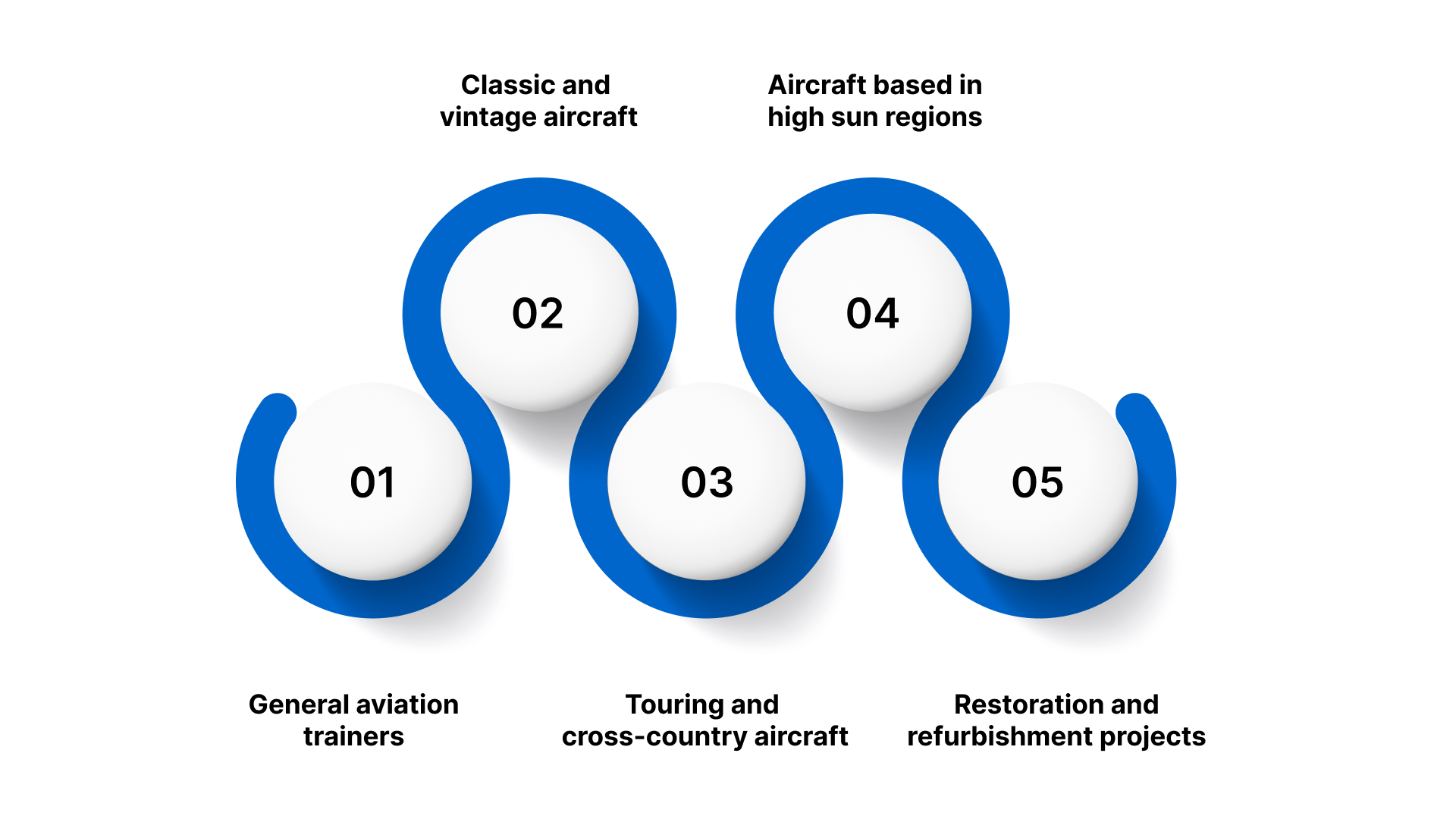
Here are the aircraft categories that frequently benefit from UV-protective replacement windows.
General aviation trainers and personal aircraft: High flight hours and frequent daytime operation increase exposure to sunlight, making UV protection useful for comfort and interior longevity.
Classic and vintage aircraft: Older aircraft often retain original or early replacement windows that show yellowing, crazing, or distortion. Replacement improves visibility while preserving period-correct fit.
Touring and cross-country aircraft: Long flight legs at altitude expose crews and passengers to sustained UV radiation. Built-in UV protection supports comfort over extended trips.
Aircraft based in high sun regions: Aircraft operated or stored in sunny climates experience faster material degradation. UV protective windows help slow this process.
Restoration and refurbishment projects: Window replacement is often part of interior or airframe restoration, especially to improve clarity and protect new interior materials.
Aircraft type influences which manufacturers have the experience and documentation needed for accurate replacement windows.
How to Choose an FAA Certified Manufacturer for UV Protective Aircraft Windows
Selecting the right replacement window is not only about material choice. Manufacturing standards, documentation, and experience all affect safety, visibility, and long-term service results. An FAA-certified manufacturer helps ensure the window performs as intended throughout its approved life.
Here are key factors to evaluate when selecting a manufacturer.
FAA approval and documentation: Replacement windows should be produced under approved processes and delivered with proper airworthiness records, such as PMA authorization or equivalent certification paperwork.
Material quality and consistency: The manufacturer should use aviation-grade cast acrylic with controlled thickness and uniform optical properties to support clear visibility.
Precision fit and reproduction accuracy: Exact dimensions reduce installation stress and help prevent distortion, leaks, or premature cracking.
Experience with specific aircraft models: Familiarity with legacy and current aircraft designs improves accuracy, especially for older or less common airframes.
Support for maintenance records: Clear documentation simplifies logbook entries and supports continued airworthiness inspections.
Selecting the right manufacturer is only part of the process, since installation and care affect long-term window performance.
If you are still comparing options, a brief consultation with Aircraft Windshield Company can help clarify FAA requirements, lead times, and material selection before you proceed. Contact us now!
Installation and Care Factors That Affect Aircraft Window Performance
Proper installation and routine care play a major role in how aircraft replacement windows perform over time. Even high-quality materials depend on correct handling, mounting, and maintenance to maintain clarity and structural behavior.
Area | Key Considerations | Practical Impact |
Installation | Correct fit, proper fastener torque, and approved sealants | Reduces stress on the window and helps prevent cracking or distortion |
Handling | Avoiding scratches, sharp tools, and improper storage before installation | Preserves surface quality and optical clarity |
Cleaning | Use of cleaners approved for acrylic windows and soft, non-abrasive cloths | Limits surface damage and haze |
Environmental exposure | Protection from prolonged sun exposure when parked, such as covers or hangars | Slows discoloration and surface wear |
Inspection | Regular checks for crazing, clouding, or edge damage | Allows early identification of issues before they worsen |
Consistent installation practices and basic care help support predictable service life and maintain clear visibility throughout normal aircraft operation.
Conclusion
When selecting tinted UV protection aircraft replacement windows, focus on visibility, comfort, and compliance. Built-in UV protection minimizes sun exposure and protects interiors, reducing the risks associated with surface-applied films. Replacement offers a clear solution when windows age or no longer meet needs.
Aircraft Windshield Company offers FAA-certified windshields and transparencies for general aviation, classic, and vintage aircraft. Each component is made from premium cast acrylic, matching original specifications. Options include windshields, side windows, canopies, and custom fabrication for rare models.
If you are planning a window replacement or restoration project, you can request a custom quote or speak with a specialist to review your aircraft make, model, and requirements.
FAQs
Should I tint a plane with plastic scratched windows?
No. Scratched acrylic windows should not be tinted. Applying tint or film over scratches does not improve visibility and can make distortion worse, especially in bright sunlight or low light conditions. Scratches scatter light, and covering them can amplify glare and haze. When scratches affect visibility, replacement is the safer and more compliant option.
Can scratched aircraft windows be polished instead of replaced?
Minor surface scratches may be polished by qualified personnel using approved methods. Deep scratches or areas near mounting holes should not be polished, as they can weaken the window and affect optical performance. An inspection is required to decide if polishing is suitable.
Do UV protective aircraft windows affect radio, GPS, or transponder signals?
No. Standard UV protective aircraft windows made from acrylic do not interfere with radio, GPS, or transponder signals. These materials do not contain metallic layers that could block or reflect avionics signals.
Will UV protective windows change cockpit color or visibility during sunset or sunrise?
UV protective aircraft windows are designed to preserve natural color perception. They do not alter color balance in a way that affects horizon definition, runway lighting recognition, or external visual cues during low sun angles.
How long do aircraft replacement windows typically last?
Service life depends on exposure, care, and operating environment. Windows that are properly installed, cleaned with approved products, and protected during storage can remain clear and serviceable for many years. Regular inspection helps identify wear before it affects visibility or safety.