
If you fly a Mooney 201, are thinking about buying one, or are deep into a maintenance or restoration project, you’ve likely run into the same question: Is the windshield mod worth it? The answers you find tend to conflict, and most are tied to individual experiences rather than clear technical context.
Much of the confusion starts with how loosely the term windshield mod is used. In some cases, it refers to aerodynamic changes. In others, it’s really about replacing an aging windshield that no longer provides clean sightlines or a proper fit.
This guide is written for owners, buyers, and technicians who already understand the airplane and want practical clarity before committing to cost, labor, or downtime.
Key Takeaways:
The term Mooney 201 windshield mod is often used to describe very different work, ranging from simple replacement to approved design changes.
Many perceived performance gains come from restored visibility and reduced glare, not from changes to the aircraft’s design.
Windshield costs vary widely based on materials, forming methods, fit accuracy, and FAA documentation, not just labor.
In many cases, a precision windshield replacement addresses the core issues without the added cost or complexity of a modification.
Choosing an FAA-compliant windshield with correct thickness and forming helps avoid fit problems, early wear, and future rework.
What “Mooney 201 Windshield Mod” Really Refers To
When the Mooney 201 entered service, the windshield was part of a broader effort to reduce drag around the nose and cockpit area. Over time, that association stuck, and the windshield itself became a frequent topic in performance discussions—even when no design change was involved.
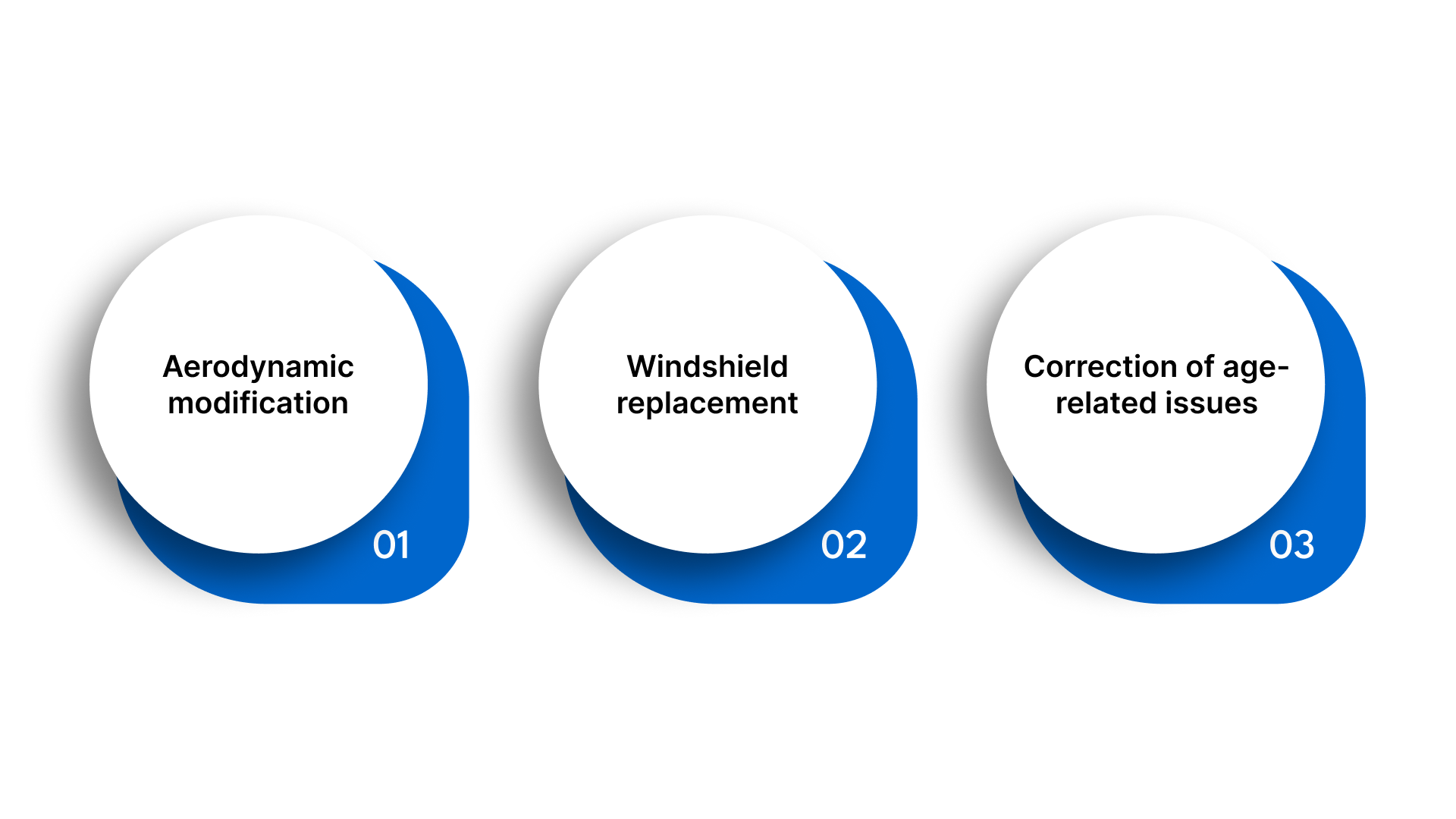
In practice, the term windshield mod is used to describe very different types of work. Here’s what owners, buyers, and shops are usually referring to:
Aerodynamic modification
Approved changes intended to alter airflow around the windshield or cowl area.Windshield replacement
Installing a new windshield that restores correct shape, thickness, and optical clarity without changing the design.Correction of age-related issues
Replacing an original or older windshield affected by distortion, glare, or surface crazing that developed over time.
Understanding which of these applies to your aircraft removes much of the confusion and sets the stage for an informed decision.
Is Your Existing Windshield Holding the Aircraft Back?
For many Mooney 201s, the windshield has been in service for decades. Even when it looks acceptable on the ground, small changes over time can affect how the airplane feels and how comfortable it is to fly.
What Changes as a Windshield Ages
Acrylic does not fail all at once. The most common issues develop slowly and are easy to dismiss.
Surface crazing that becomes noticeable in low sun or haze
Optical distortion near normal sightlines, especially when scanning for traffic
Increased glare during climb, approach, or long cross-country legs
These issues rarely ground an aircraft, but they can increase eye strain and reduce confidence.
Perceived Performance vs. Actual Drag
Many pilots associate these symptoms with lost performance. In reality, the aircraft may be flying as designed, while the pilot’s view and workload have changed. When visibility improves after installing a new windshield, the airplane often feels smoother and easier to manage, even though no aerodynamic change was made.
When Replacement Solves the Problem
If the windshield shows visible crazing, distortion, or uneven thickness, replacement often restores clear sightlines and a more predictable visual reference. In those cases, the improvement is sometimes described as a “mod,” even though the aircraft’s configuration remains the same.
This distinction matters before assuming a performance issue or committing to more complex work.
Performance Expectations: Separating Myth From Measurable Reality
Discussion around the Mooney 201 windshield often centers on speed. Over the years, that focus has created expectations that don’t always match what the aircraft can deliver.
Why Speed Claims Persist
Many references trace back to early comparisons, owner anecdotes, or changes made alongside other upgrades. When several items are addressed at the same time, it becomes difficult to attribute any change to the windshield alone. Those stories continue to circulate long after the original context is lost.
What the windshield Can and Cannot Do
A windshield that matches the original shape and thickness supports the aircraft’s intended airflow. Beyond that, gains are usually limited.
A correctly fitted windshield maintains the design profile
A worn or distorted windshield can create visual discomfort
Replacing an aged windshield restores clarity, not airframe design
Expecting a noticeable speed increase from the windshield by itself often leads to disappointment.
Why Replacements Feel Like an Upgrade
When visibility improves, pilot workload drops. Scan patterns feel easier, glare is reduced, and long flights feel less tiring. These changes can give the impression that the aircraft is performing better, even when cruise numbers remain the same.
Understanding this difference helps set realistic expectations before committing to a modification or chasing marginal gains.
Mooney 201 Windshield Mod Cost: What Actually Drives Pricing
Owners researching a Mooney 201 windshield mod often see prices ranging from a few thousand dollars to well into five figures. The spread exists because the work described as a “mod” can mean very different things, from a straightforward replacement to more involved changes that affect fit, materials, and approval requirements.
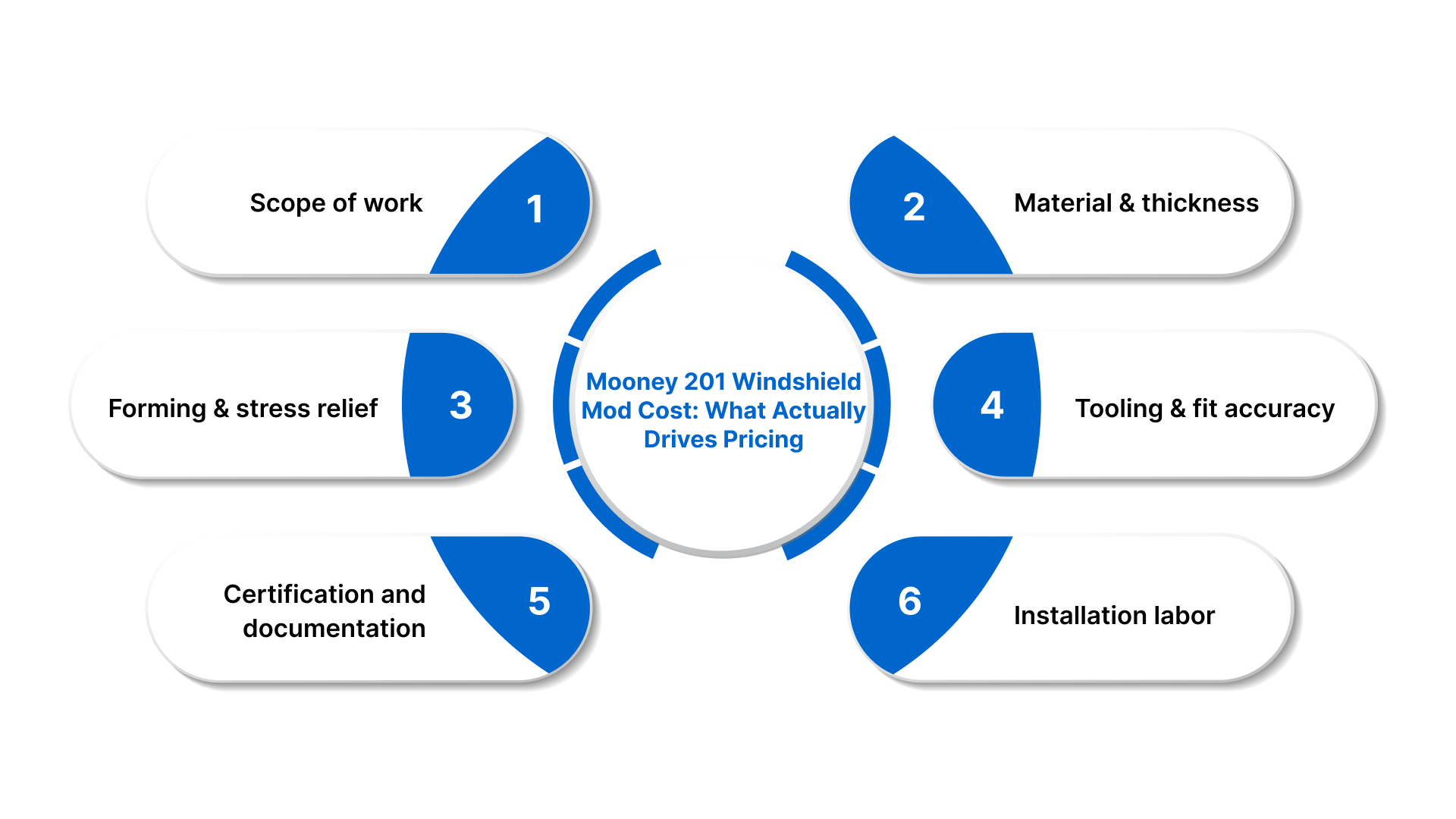
Here are the main factors that influence where a project falls within that range:
Scope of work: A direct windshield replacement costs far less than any change that alters geometry, mounting, or surrounding structure.
Material and thickness: Cast acrylic thickness, optical grade, and material consistency all affect cost. Thicker or higher-grade material increases both fabrication time and expense.
Forming and stress relief: Proper thermoforming and controlled annealing add time and shop effort but reduce distortion and early surface failure.
Tooling and fit accuracy: Windshields made from dedicated tooling or accurate templates cost more than generic fits, but they reduce installation issues and rework.
Certification and documentation: FAA-compliant parts, traceability, and proper paperwork add cost compared to non-certified reproductions.
Installation labor: Labor varies by shop, aircraft condition, and whether surrounding components need adjustment or repair.
Understanding these variables helps explain why two owners can discuss “the same mod” while facing very different invoices.
Replacement vs Mod: Which One Actually Makes Sense?
When comparing options, many owners discover that replacement typically falls in the low-to-mid four figures, while modifications can extend into the high four figures or beyond, depending on scope and approvals. The gap exists because the two paths solve different problems, even though they’re often discussed as if they were the same thing.
Here’s a side-by-side view of how the choices differ:
Aspect | Windshield Replacement | Windshield Mod |
Primary goal | Restore original shape, thickness, and clarity | Change airflow or configuration |
Typical cost range | Lower to mid four figures | Upper four figures and higher |
Aircraft configuration | Remains unchanged | May be altered |
Approval complexity | Standard replacement with proper paperwork | Additional approvals often required |
Impact on visibility | High, especially with aged acrylic | Depends on design and execution |
Risk of scope growth | Low | Higher, especially once work begins |
Best fit for | Owners, buyers, restorations with worn windshields | Aircraft seeking specific design changes |
For many aircraft, a precision replacement addresses glare, distortion, and fit issues without adding complexity. Modifications can make sense in specific cases, but they tend to cost more and require clearer justification. Seeing the options side by side helps avoid surprises after work is already underway.
Material and Forming Details That Matter on a Mooney 201
Two windshields can look similar on the ramp and behave very differently in service. Material choice, thickness, and how the windshield is formed all affect clarity, fit, and service life, even when the part meets basic requirements.
Here’s how those factors compare:
Factor | Options | Detail |
Material | Cast acrylic | Standard choice for Mooney aircraft; good clarity and predictable forming characteristics |
Polycarbonate | Higher impact resistance; more sensitive to surface wear and handling | |
Thickness | Original-equivalent thickness | Matches factory design for fit and structural intent |
Increased thickness | Can reduce flex and vibration; adds weight and requires accurate forming | |
Forming method | Drape forming | Uses gravity over tooling; common for large, curved windshields |
Vacuum forming | Applies controlled pressure for closer conformity to tooling | |
Stretch forming | Tensions material during forming to improve optical consistency | |
Stress relief | Basic cooling | Faster process; higher chance of internal stress |
Controlled annealing | Reduces residual stress that leads to distortion and surface cracking | |
Optical finish | Standard trim and polish | Meets basic visibility needs |
Enhanced optical finishing | Reduces distortion in critical sightlines |
Differences in these areas explain why some windshields remain clear for years while others show glare or distortion much sooner, even on similar aircraft.
FAA Requirements That Apply to Mooney Windshields
A windshield is a structural and safety-related component, not just a visibility item. Any change or replacement must meet FAA expectations for fit, material, and documentation to protect both the aircraft and the people flying it.
Here are the key points owners, buyers, and maintenance shops should keep in mind:
Approved materials and thickness: The windshield must meet specified material types and minimum thickness to handle loads and environmental exposure.
Fit and mounting accuracy: Poor fit can introduce stress, lead to cracking, or affect the surrounding structure over time.
Traceability and paperwork: FAA-compliant parts require proper records that support installation and future inspections.
Consistency with aircraft configuration: Even minor deviations from the original design can raise questions during maintenance or resale.
Long-term service considerations: A compliant windshield reduces the risk of early replacement, inspection findings, or maintenance delays.
Addressing these items early avoids problems that tend to surface long after the aircraft returns to service.
Why Mooney Owners Work With Aircraft Windshield Company?
For Mooney owners, buyers, and maintenance teams, windshield work comes down to accuracy, material control, and confidence that the part will fit and perform as intended. Aircraft Windshield Company brings decades of hands-on manufacturing experience to Mooney aircraft, with a focus on FAA-compliant production and repeatable results.
Here’s what sets Aircraft Windshield Company apart:
Here’s what sets Aircraft Windshield Company apart:
60+ years of manufacturing experience: Founded in 1963, with three generations of family ownership focused on aviation windshield production.
300+ legacy molds and templates: Extensive tooling library supporting accurate geometry for classic and vintage aircraft, including Mooney models.
FAA-certified manufacturing: Holds FAA PMA status and complies with FAR Part 21 requirements for approved aviation parts.
Large-format forming capability: Thermoforming and annealing equipment capable of producing windshields up to 10 feet in size.
Mooney-specific replacement parts: FAA-compliant windshields and windows for Mooney Mite M-18, M-20, and M-21 aircraft, produced in specified thicknesses.
Controlled forming and stress relief: Processes designed to reduce distortion, glare, and early surface cracking over long service life.
Support for restorations and modified aircraft: Ability to work from original parts, templates, or CAD data when standard replacements are not suitable.
This combination of experience, tooling depth, and certified production allows Mooney operators to address windshield issues with clarity before committing to downtime or expense.
To see how this experience extends beyond general aviation, into record-setting land speed cars, historic restorations, and custom one-off projects, check out our featured stories, behind-the-scenes fabrication work, and ongoing project highlights.
Conclusion
For the Mooney 201, the windshield question is rarely about a single upgrade. It’s about visibility, fit, service life, and knowing whether replacement solves the issue before committing to more involved work. Clear expectations lead to better outcomes, fewer surprises, and smarter use of downtime and budget.
If you’re weighing options for ownership, purchase evaluation, or restoration, a focused discussion can bring quick clarity.
Contact us today to talk through your Mooney windshield questions with a specialist who understands the aircraft, the materials, and the approval requirements—before any work begins.
FAQs
Is a Mooney hard to fly?
A Mooney is not difficult to fly, but it does reward discipline. Control response is more direct than that of many trainers, and energy management matters during approach and landing. Pilots transitioning from slower aircraft often note the need for better speed control and planning, not added complexity.
What is the fastest Mooney model?
Among production aircraft, the Mooney M20TN Acclaim and Acclaim Ultra are generally recognized as the fastest, with cruise speeds that exceed 240 knots at altitude. Earlier turbocharged models, such as the M20K series, also offer strong cruise performance for their class.
Does Mooney still make parts?
Yes. Mooney International continues to support many aircraft through factory channels, and a large aftermarket network supplies parts for legacy models. For items like windshields and windows, FAA-compliant manufacturers fill gaps where original parts are limited or no longer produced.
How much does a Mooney airplane cost?
Prices vary widely by model, engine time, avionics, and condition. Entry-level vintage Mooneys can be found in the low six figures, while later turbocharged or long-body models with modern avionics often reach several hundred thousand dollars. Pre-buy inspections play a major role in setting true value.
Are Mooneys expensive to maintain compared to similar aircraft?
Operating costs are often comparable to those of other high-performance singles, but maintenance quality matters. The airframe is efficient and durable, yet repairs tied to aging components or deferred upkeep can add cost. Owners who stay ahead of maintenance tend to see more predictable expenses.