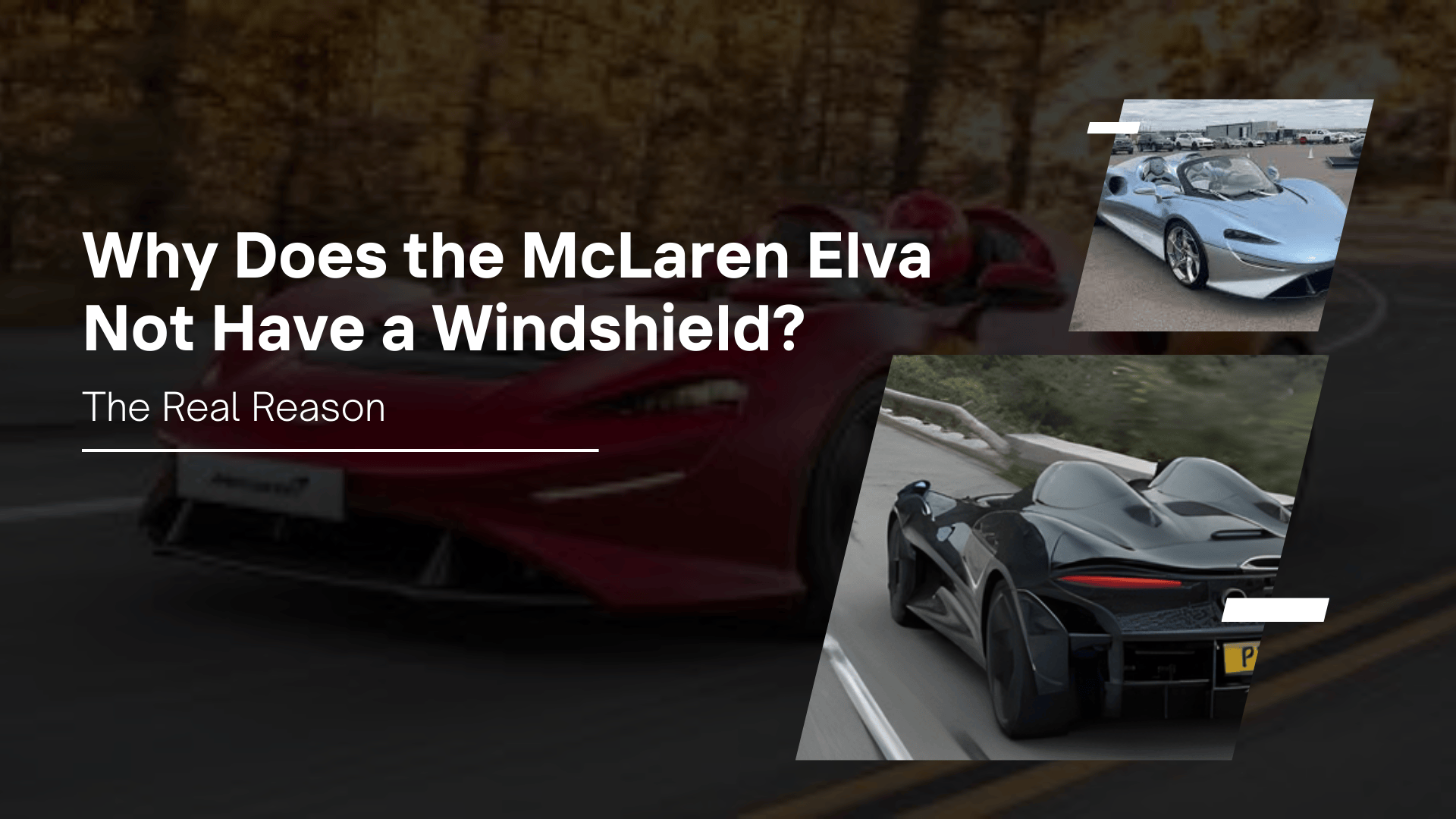
You’ve probably seen photos of the McLaren Elva and felt that moment of confusion: How can a modern hypercar exist without a windshield? If you’re wondering whether it’s a design stunt, a safety compromise, or something that only works on paper, that reaction makes sense. Most cars rely on glass as a basic necessity, so removing it feels counterintuitive.
The short answer is this: the Elva doesn’t use a windshield because McLaren engineered an alternative. The reasoning behind that choice, and where its limits begin, is what we’ll break down next.
Key Takeaways:
The McLaren Elva has no windshield because airflow was engineered to replace glass, not because of styling or cost.
The Active Air Management System controls air above the cockpit instead of blocking it with a physical screen.
A traditional windshield would interfere with the Elva’s intended airflow paths and pressure behavior.
Comfort is improved through air control, but weather, debris, and legal limits still apply.
Windshields remain essential in many applications, which is why specialist experience matters when designs move beyond standard solutions.
The Real Reason the McLaren Elva Has No Windshield
The McLaren Elva was designed to eliminate anything that separates the driver from the car and its surroundings, which is why it has no windshield. McLaren planned the Elva with a fully open cockpit, using engineering solutions rather than traditional glass.
The Elva’s philosophy is rooted in McLaren’s early open-cockpit race cars, which prioritized airflow and driver exposure over enclosed cabins. In Can-Am models like the M6A, M8E, and M20, glass was considered optional rather than essential.
That decision comes down to two core reasons:
Pure driving focus and minimal structure
The absence of a windshield, roof, and side windows allows direct exposure to sound, airflow, and visibility, while also removing weight and structural elements that would otherwise shape the car’s design.A system designed to replace glass, not rely on it
The Elva was engineered with a dedicated airflow-based solution in mind from day one, making a physical windshield unnecessary rather than optional.
To understand how this decision works beyond philosophy, you need to examine the system specifically designed to replace a physical windshield.
Also Read: Lexan or Plexiglass: Ultimate Windshield Material Guide
Active Air Management System (AAMS): McLaren’s Invisible Windshield
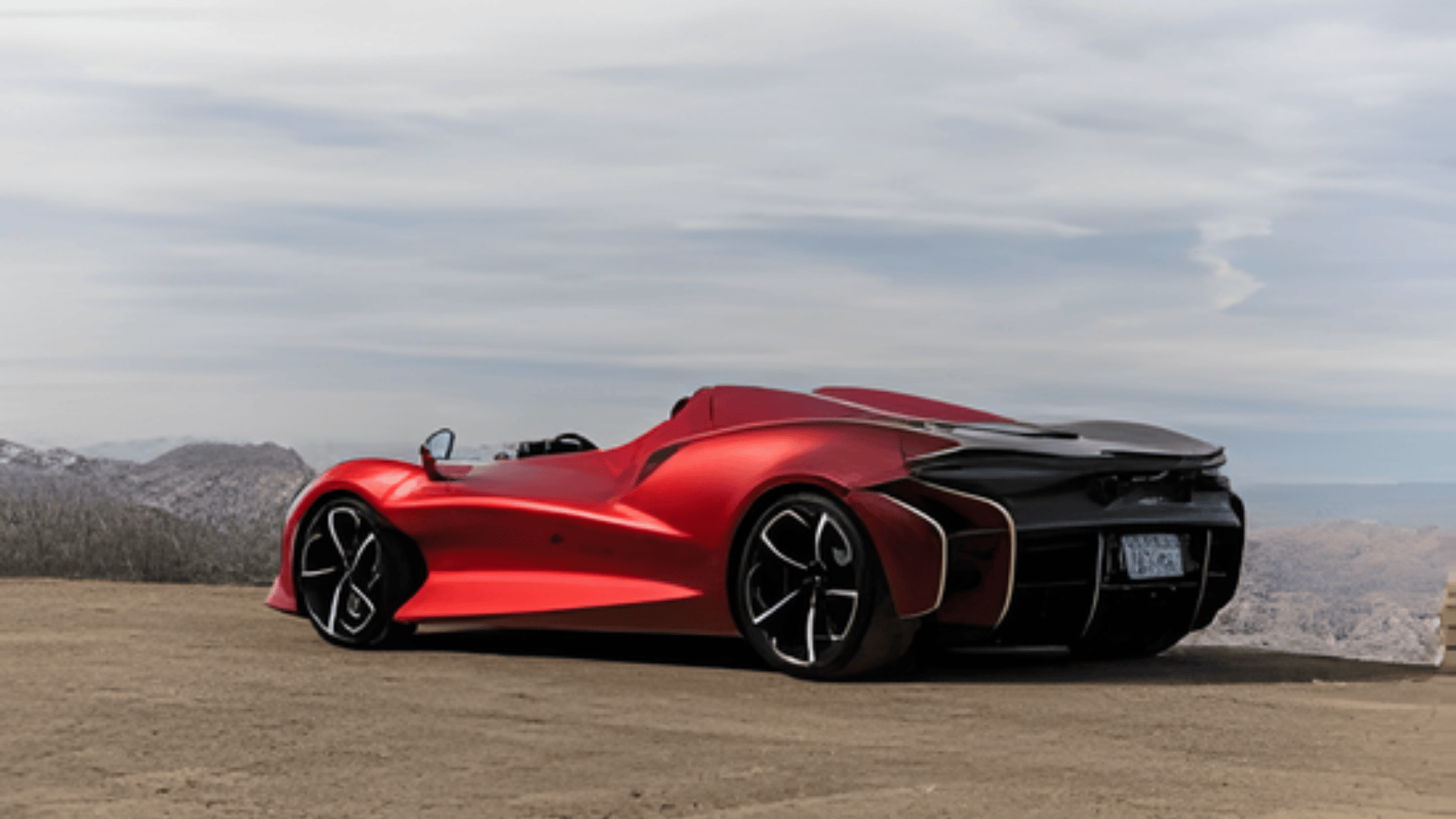
Removing the windshield only works if something else takes over its role. That role is filled by the Active Air Management System, a solution developed specifically for the Elva’s open cockpit. Instead of stopping airflow, the system controls where it goes and how it behaves around the occupants.
At a functional level, the system works as follows:
The front bodywork guides incoming air along controlled paths instead of allowing it to spill into the cockpit.
Sculpted surfaces manage pressure changes so airflow stays attached to the car rather than breaking into turbulence.
Air directed over the cabin works in tandem with the AAMS output, strengthening the protective air pocket around the occupants.
Cooling channels and body contours are arranged so airflow serves cooling and balance needs without entering the cockpit space.
The airflow system does not operate in isolation, and its effectiveness depends on how the entire body manages air movement.
How Aerodynamics Replace Glass in the Elva
In the Elva, glass is not missing because of cost or style. It’s missing because it would work against the car’s aerodynamic intent. A fixed windshield would interrupt airflow paths that were designed from the start to remain open, controlled, and predictable.
The difference comes down to how air is treated:
Why would glass interfere:
A traditional windshield creates a hard pressure wall. In an open cockpit car like the Elva, that pressure buildup would force air to spill unpredictably into the cabin, increasing buffeting and instability instead of reducing it.
Managing air versus blocking air:
Rather than stopping airflow, the Elva guides it. Air is shaped, lifted, and redirected so it passes over the occupants in a controlled manner, working with the body surfaces and AAMS rather than fighting against them.
Once airflow replaces glass, the next challenge becomes keeping the car balanced without relying on fixed structural elements.
Also Read: Mastering Automotive Plastic Injection Molding: A Complete Industry Guide
Active Aerodynamics: Stability Without a Windshield
An open cockpit changes how air loads act on the car, especially at speed. Without a windshield frame or roof structure, stability depends on how the body and movable aero elements respond to changing conditions rather than relying on fixed surfaces.
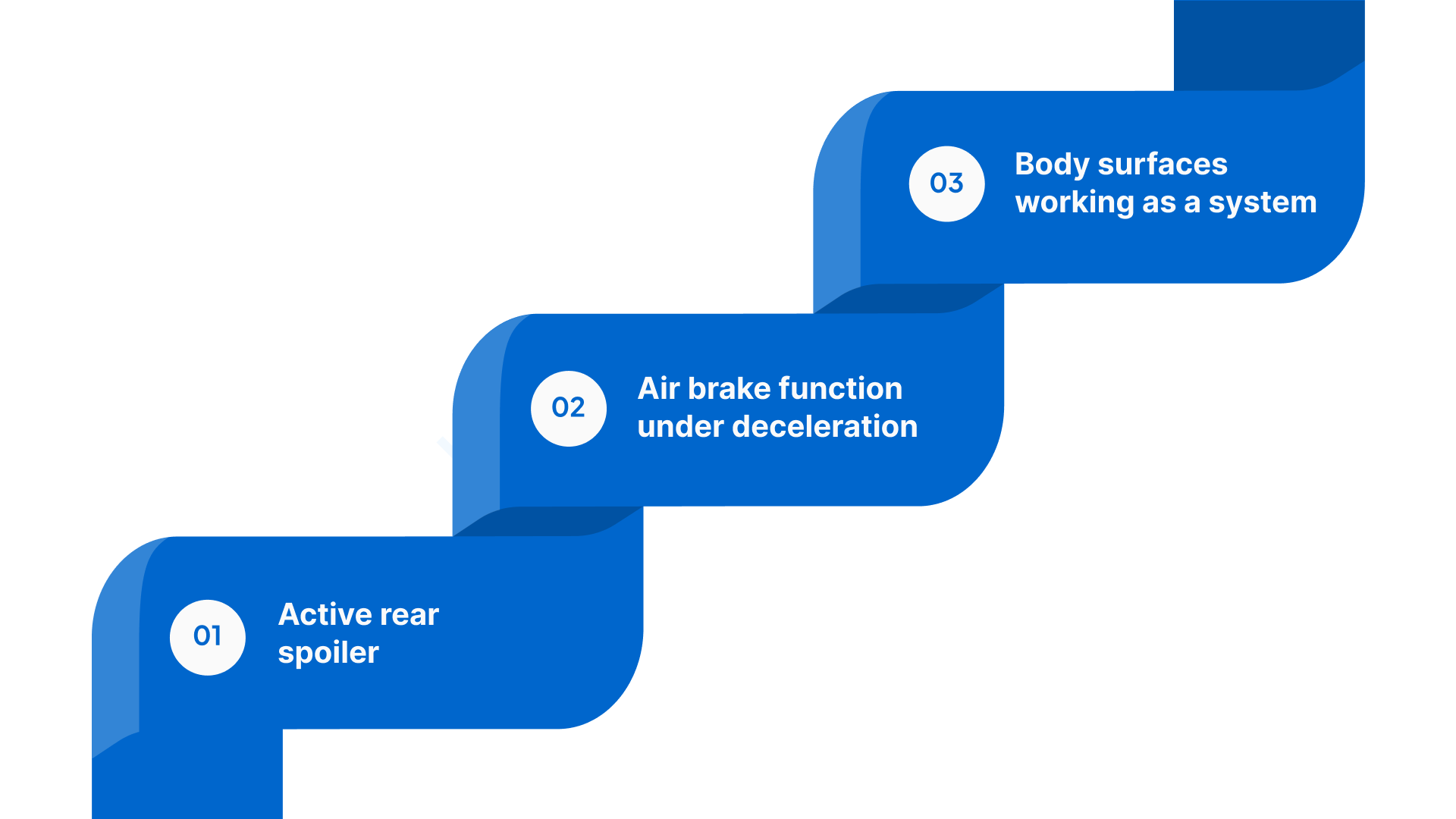
Key systems work together to keep the Elva settled:
Active rear spoiler: The rear wing adjusts its position based on speed and driving conditions, helping maintain balance as airflow changes around the open cabin.
Air brake function under deceleration: During braking, the rear wing rises to increase resistance, reducing stopping distance and keeping the car composed as weight shifts forward.
Body surfaces working as a system: The car’s surfaces guide airflow so front and rear forces remain balanced, preventing lift or instability that could be amplified by the lack of a windshield.
Even with these systems in place, there are practical limits that affect comfort, exposure, and day-to-day usability.
Practical Limits of Driving Without a Windshield
An open cockpit supported by airflow control changes how comfort and safety are defined. The Elva manages wind in a way that makes high speeds possible without glass, but that choice comes with clear boundaries that drivers need to understand.
Key considerations include:
Occupant comfort: The controlled air pocket reduces direct wind pressure on the upper body and face, making sustained driving possible without constant buffeting.
Exposure to debris and weather: Air management cannot stop dust, insects, rain, or road debris in the way a physical windshield can. Eye protection and helmets are commonly recommended.
Safety expectations: The system addresses airflow, not impact protection. It does not replace the role of laminated glass in shielding occupants during unexpected events.
Usage limitations: The design suits controlled environments and fair conditions far better than daily traffic or poor weather.
Beyond comfort and exposure, regulations play a decisive role in how this design reaches different markets.
Road Laws That Define Where the Elva Can Be Driven
A windshield-free design does not exist outside regulation. While the Elva was engineered to operate without glass, road approval rules ultimately decide where that configuration can be used.
Key regulatory factors include:
United States: Federal Motor Vehicle Safety Standards (FMVSS)
Passenger cars sold for road use must comply with FMVSS requirements, including FMVSS 205 (approved glazing materials) and FMVSS 212 (windshield mounting and retention). These rules also assume the presence of wiper systems.
Unlike motorcycles or certain specialty vehicles, passenger cars are not exempt from driver eye protection requirements. As a result, McLaren was required to offer a fixed windshield for Elvas delivered to U.S. customers.
Europe: Whole Vehicle Type Approval (WVTA)
European approval rules, governed by Directive 2007/46/EC and later Regulation (EU) 2019/2144, place strict requirements on forward visibility, debris protection, and occupant safety.
Vehicles without windshields face approval barriers unless they fall under limited-production or small-series classifications, where exceptions may apply under controlled conditions.
Market-specific compliance strategy
Rather than altering the car’s core design, McLaren addressed these legal constraints by offering two configurations. The windshield-equipped version satisfies local registration laws, while the original open-cockpit form remains available where regulations allow.
Track and private-road operation
Public road regulations do not apply on closed circuits or private property. In these settings, the windshield-free Elva can be used as intended, without regulatory conflict.
With regulations in mind, comparing the Elva to similar open-cockpit cars helps clarify how unusual its approach really is.
How the Elva Differs From Other Windshield-Less Supercars
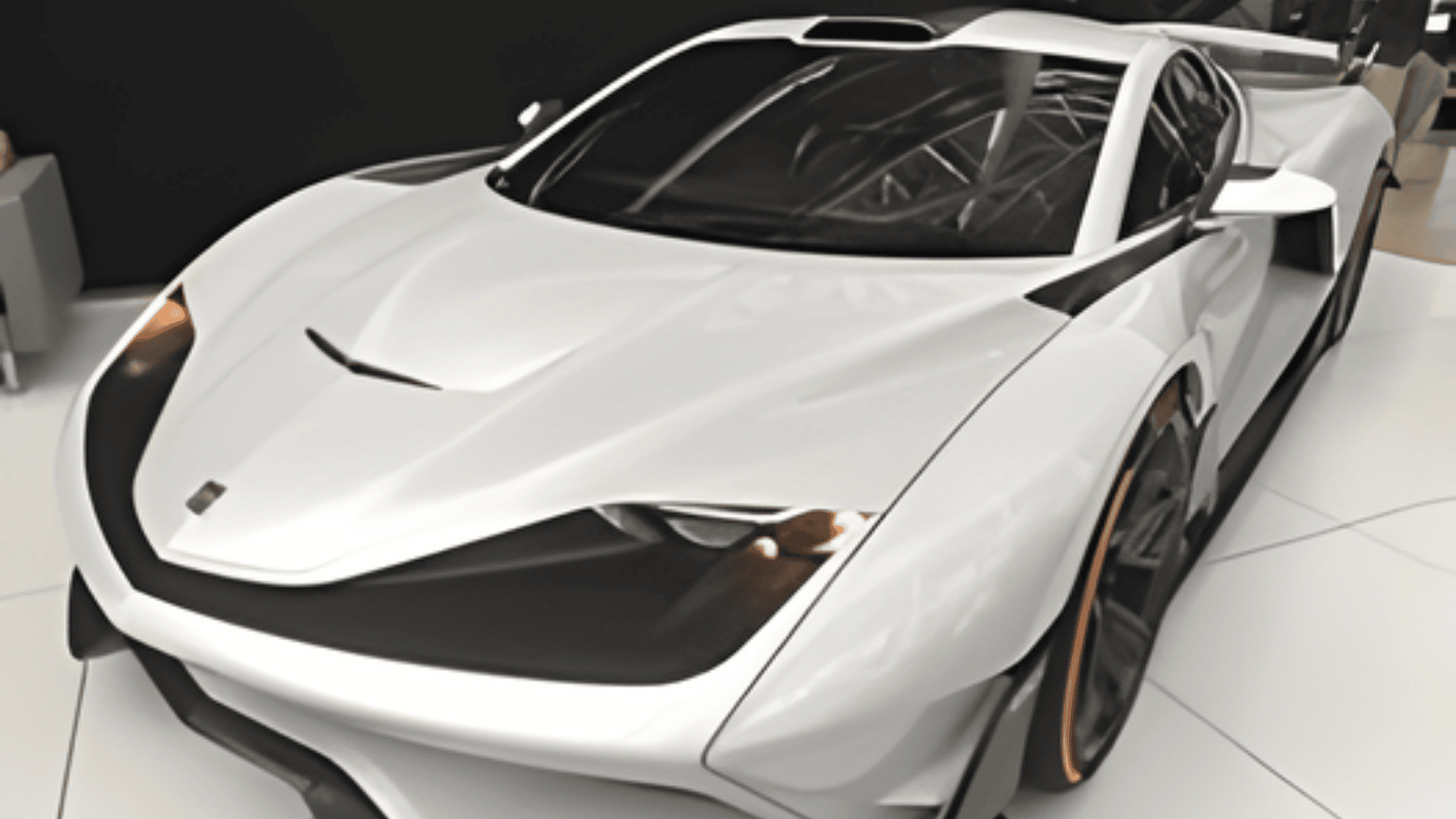
Several modern speedsters run without a conventional windshield, but they do not solve airflow the same way. Some use small fixed screens or sculpted bodywork to push air upward. The Elva takes a different route by managing the air dynamically instead of blocking it with hardware.
Here are the key differences:
Aspect | McLaren Elva | Ferrari Monza SP1 / Ferrari Monza SP2 | Aston Martin V12 Speedster |
Airflow approach | Active Air Management System (AAMS) adjusts airflow with speed | Small aero screens deflect air upward | Twin cowl fairings and low screens guide air around occupants |
Physical deflectors | None | Fixed aero screens | Low-profile screens and sculpted bodywork |
Occupant protection method | Air shaped into a protective bubble | Screens reduce direct wind impact | Bodywork channels airflow past the cockpit |
Design philosophy | Air as the primary protective element | Classic barchetta-style deflection | Static bodywork shaping airflow |
While these cars share an open-cockpit theme, the Elva stands apart by removing glass entirely and addressing airflow through a dedicated system rather than partial physical barriers.
These comparisons show how complex windshield decisions can be, which is where specialized manufacturing knowledge becomes critical.
Why Trust Aircraft Windshield Company for Custom Windshields
Understanding when a windshield is required and when alternative approaches make sense comes from long exposure to edge-case vehicles. That depth of experience is what sets Aircraft Windshield Company apart.
Key facts behind that trust include:
60+ years of continuous experience: Operating since 1963, with three generations focused on aviation, racing, and specialty vehicles, where standard glass solutions often do not apply.
300+ existing molds and templates: Covering historic race cars from marques such as McLaren, Porsche, Ferrari, Lola, and Lotus, including Can-Am McLarens like the M6, M8, and M20.
FAA-approved manufacturing background: Holding FAA Production Approval (PAH) and Parts Manufacturer Approval (PMA), reflecting strict standards for clarity, material behavior, and structural performance.
Large-scale custom capability: Thermoforming capacity for parts up to 10 feet, using cast acrylic, polycarbonate, and specialty plastics based on application needs.
Proven motorsport and restoration work: Documented projects spanning Can-Am McLarens, historic GT race cars, and one-off restorations where accuracy and visibility matter more than volume production.
This background explains why the company is trusted not only to build windshields, but also to advise when glass is the right solution and when it is not.
Conclusion
The McLaren Elva exists without a windshield because its design replaces glass with controlled airflow. Through aerodynamics and the Active Air Management System, McLaren created an open cockpit that functions as intended, within clear limits set by exposure, safety expectations, and regulation.
For classic racers, open-cockpit vehicles, or non-standard windshield challenges, proven experience makes the difference. Aircraft Windshield Company offers more than 60 years of expertise across racing, aviation, and specialty applications.
Contact Aircraft Windshield Company to discuss project requirements or request guidance on a custom windshield solution.
FAQs
Can the McLaren Elva be driven at highway speeds without a windshield?
Yes, in configurations and locations where it is permitted. The car was engineered to remain stable and controllable at speed, but comfort and exposure vary based on conditions such as traffic, temperature, and road surface.
Does the Elva require special driver gear when used without a windshield?
In many cases, eye protection is recommended to protect against dust and debris. Some owners also choose helmets, especially during spirited driving or track use.
Is the windshield-free Elva louder inside the cockpit than other supercars?
The open cockpit allows engine sound, exhaust notes, and ambient noise to reach the driver directly. This creates a more exposed driving environment compared to enclosed cars.
Could other road cars adopt a similar no-windshield approach?
This type of design is limited to low-volume vehicles with specific engineering goals. Broad adoption would face legal, comfort, and safety constraints that do not apply to specialty models like the Elva.
Does removing the windshield affect maintenance or long-term durability?
The absence of glass removes concerns such as chips, cracks, and wiper wear. At the same time, exposed interior surfaces may require more frequent cleaning and care due to weather and debris exposure.